Turkish meze explained: cold and hot meze and how to order
Turkish meze are small plates shared at the start of a meal, or as the whole meal. They come in two kinds, soğuk meze (cold) and sıcak meze (hot), and the best way to order is to mix both: a few cold plates first, then one or two hot ones, with bread for everything.
If you have never ordered meze in a Turkish restaurant, the rules are simple. Do not order everything at once, pick plates that are different from each other, and leave room to order again. The rest is below.
Where to eat meze in London


Cold meze (soğuk meze)
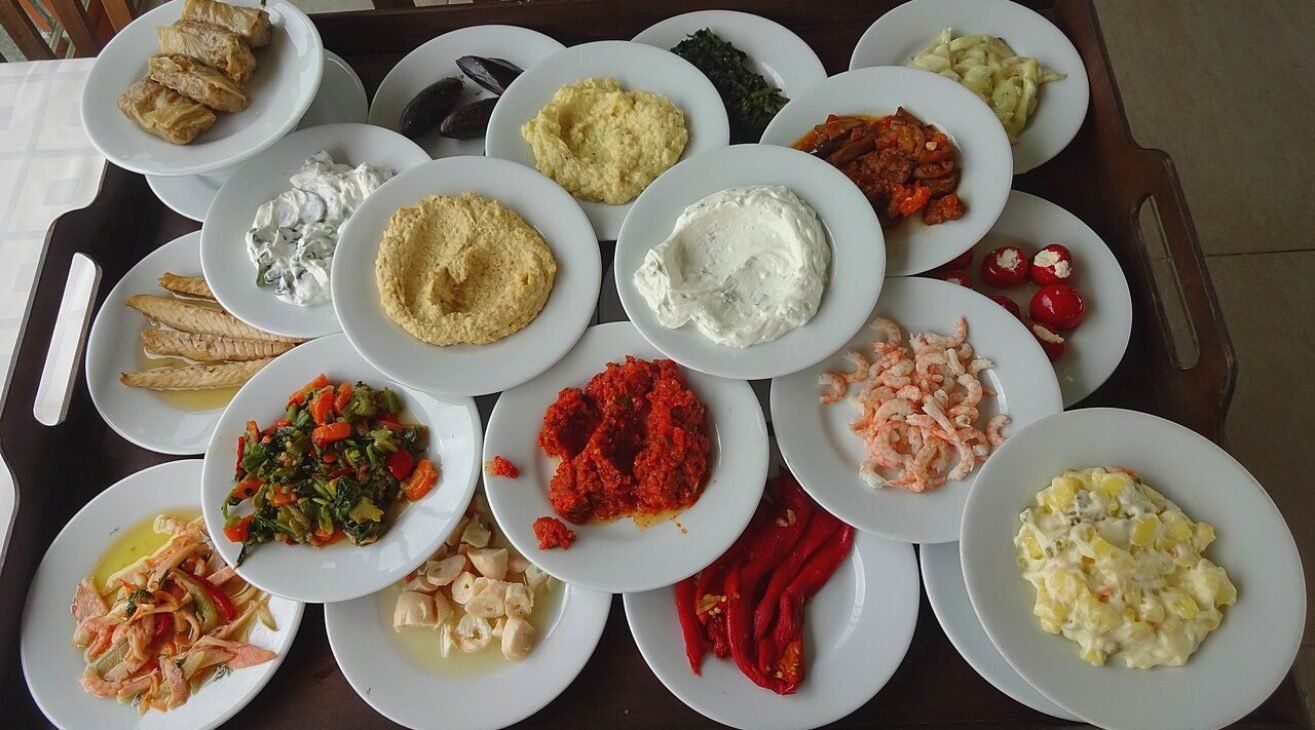
Cold meze arrive first. In an Istanbul meyhane the classics are white cheese (with melon in summer), topik (an onion and chickpea paste with tahini) and lakerda (cured bonito). In London you are more likely to see these:
- Haydari: thick yoghurt with garlic and herbs (try our haydari recipe).
- Patlıcan salatası: smoky aubergine salad (see our patlıcan salatası recipe).
- Acılı ezme: hot chopped tomato and pepper salad (see our acılı ezme recipe).
- Humus: the Turkish spelling, sometimes served warm with butter (see our humus recipe).
- Fava: a cold purée of dried broad beans with olive oil and dill.
- Şakşuka: fried aubergine, peppers and courgette in tomato sauce, served cold.
- Yaprak sarma: vine leaves rolled round rice and cooked in olive oil (our yaprak sarma recipe).
- Tarama: a pink or cream fish roe dip.
- Cacık, kısır and piyaz: cucumber yoghurt, bulgur salad and white bean salad.
Many cold meze are vegetables cooked in olive oil, so a meze table works well for vegetarians.
Hot meze (sıcak meze)
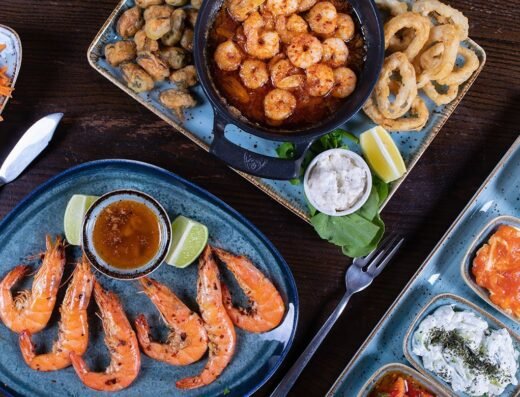
Hot starters, often called ara sıcak (“in-between hot”), follow the cold plates. Expect fried calamari, sigara böreği (crisp cheese pastry rolls; see our sigara böreği recipe), paçanga böreği (pastırma and cheese in pastry), grilled hellim, mücver (courgette fritters), içli köfte, fried liver, prawns in butter and fried mussels. Eat them while they are hot and crisp; they do not improve with waiting.
How many meze should you order?
Our rule of thumb: 4 to 6 plates for two people, chosen so that no two are alike. One cheese or yoghurt dish, one aubergine, one olive-oil vegetable, one pulse (fava, humus or piyaz), one seafood, and one hot plate is a balanced table. For four people, go to 7 or 8 and add a second hot dish.
- Start small. Meze come in waves and you can always order more.
- Mix textures: creamy, smoky, sharp and crisp.
- A main course is optional. Plenty of people make a whole evening of meze.
- If you want whole fish, ask the price before it is cooked. Fish is often priced by weight.
How meze are ordered in London
Most London Turkish restaurants price meze per plate, and many also offer a mixed cold meze platter (karışık meze or “mixed meze”) for two or more, which is the easy way in if you cannot choose. Some places, Sumak in Crouch End among them, do sharing platters for larger groups. In a few meyhane-style places a waiter brings a tray of cold dishes to the table and you point at what you want; ask what each one is, as they all go on the bill.
Bread usually comes with meze; warm pide or lavaş, sometimes topped up as you go. If you are planning a long evening, tell the staff and they will pace the hot dishes. On the bill, check whether a service charge has been added before you tip: many London restaurants include one.
Meze for different tastes
- Vegetarians: olive-oil vegetables, stuffed vine leaves, fava, haydari, aubergine dishes and white cheese. Ask about fish roe and meat stock if you are strict.
- Fish lovers: tarama, fried calamari, prawns and fried mussels.
- Meat eaters: paçanga böreği, içli köfte and fried liver.
- Spice lovers: acılı ezme, which is properly hot, and çiğ köfte, seasoned with isot (see our guide on whether Turkish food is spicy).
Rakı and what to drink
Rakı is an aniseed spirit distilled from grapes, about 45% alcohol. It is drunk with water, which turns it milky (hence the nickname aslan sütü, “lion’s milk”), and it is the traditional partner for meze, especially fish and white cheese. The toast is şerefe. You do not have to drink alcohol: ayran, soft drinks and şalgam are all normal. For more on şalgam and pickles, see our guide to Turkish pickles.
Where to eat meze in London
Our guide to Turkish meze bars in London lists the best places area by area. You can also browse meze and fine dining places on Turkish Dish, or our meyhane category for traditional taverns. If you want fish with your meze, read our guide to Turkish seafood restaurants in London.
Our pick: Sumak, Crouch End
A family-run Turkish restaurant on Tottenham Lane with a long menu of hot and cold meze as well as charcoal-grilled kebabs. Hot meze on the menu include mücver and içli köfte, which makes it a good place to start if you want to order a table of small plates. See Sumak on Turkish Dish.
Turkish Dish recommends



- HAZ Premier Place – Turkish meze & fine dining in City of London
- Kibele Restaurant – Turkish catering & events in Edgware Road & Marylebone
- Filika Restaurant Wanstead – Turkish meze & fine dining in Wanstead
- Lokkum Bar & Grill – Turkish meze & fine dining in Woodford
- Akşam Güneşi Meze Bar – Turkish meyhane in Edmonton
- Efes Plus Richmond – Turkish kebab & döner in Richmond
See all 95 Meze & Fine Dining places in London
Meze FAQs
What is meze in Turkish food?
Small plates served before the main course, or as the meal itself, and shared by the table.
What is the difference between cold and hot meze?
Cold meze (soğuk meze) come first: cheese, yoghurt, aubergine, pulses and olive-oil vegetables. Hot meze (sıcak meze or ara sıcak) such as calamari, börek and fritters come after.
How many meze should I order?
Four to six plates for two people, more for a bigger group. Start small and order again.
Is meze vegetarian?
Many are, including most olive-oil vegetable dishes, dips and salads. Others contain fish, meat or liver, so ask.