Yaprak sarma recipe: Turkish vine leaves stuffed with herby rice
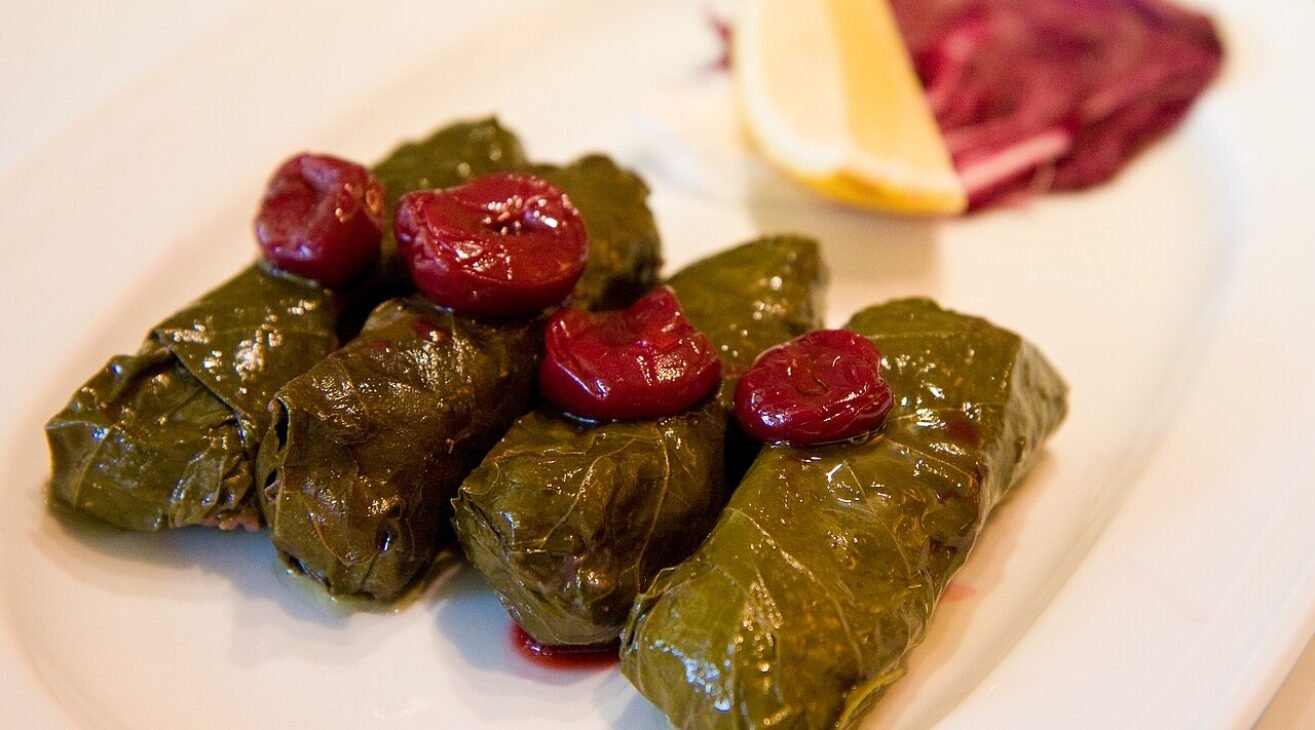
Yaprak sarma (‘wrapped leaves’) are small, finger-thin parcels of vine leaf filled with rice, onion, pine nuts, currants and herbs, cooked slowly in olive oil and lemon and served cold. They are one of the great tests of a Turkish home cook: the tighter and slimmer the roll, the more respect at the table. A plate of them, glossy with oil and sharp with lemon, is the backbone of any meze spread.
Rolled and stuffed leaves are eaten from the Balkans to the Caucasus and the Levant, and Wikipedia’s page on stuffed leaves gives a sense of how far the idea has travelled. This version is the zeytinyağlı (olive-oil) style, which the Ministry of Culture and Tourism says is popular in all regions of Türkiye and describes as vine leaf wraps with olive oil.
What is yaprak sarma?
In Turkish, sarma means something wrapped and dolma means something stuffed, so stuffed peppers are biber dolması while rolled leaves are yaprak sarma. In practice many people use the words loosely, and you will see ‘dolma’ on menus for both.
Zeytinyağlı sarma
The olive-oil version has no meat. The rice filling is cooked with plenty of onion and seasoned with allspice, cinnamon, dried mint, currants and pine nuts. It is always eaten at room temperature or cold, often as a starter, and keeps well for several days.
Etli sarma
The meat version uses minced beef or lamb with rice, tomato and pepper paste. It is served warm, usually with garlic yoghurt, and treated as a main course rather than a meze. The Black Sea region rolls a similar dish in collard greens (kara lahana) instead of vine leaves.
Ingredients
Makes about 40 rolls (serves 6–8 as a meze).
For the leaves
- 250g jar or pack of vine leaves in brine (about 50 leaves; you will use 40 and line the pan with the rest)
For the filling
- 200g short-grain or baldo rice
- 2 medium onions (about 300g), finely chopped
- 100ml extra virgin olive oil
- 2 tbsp pine nuts
- 1 tbsp currants, soaked in warm water for 10 minutes
- 1 tbsp tomato paste
- 1 tsp dried mint
- 1 tsp ground allspice
- ½ tsp ground cinnamon
- 1 tsp sugar
- 1 tsp salt and ½ tsp black pepper
- 15g each dill and flat-leaf parsley, finely chopped
For cooking
- 50ml extra virgin olive oil
- 400ml hot water
- Juice of 1 lemon, plus 1 lemon cut into wedges to serve
How to make yaprak sarma
1. Prepare the leaves
Unroll the leaves into a large bowl, cover with just-boiled water and leave for 10 minutes. Drain, then soak in cold water for 10 minutes more to remove excess brine. Snip off any stalks and keep the torn leaves aside to line the pan.
2. Cook the filling
Rinse the rice until the water runs clear, then soak it in warm water for 15 minutes and drain. Warm the 100ml olive oil in a wide pan, add the pine nuts and stir for 2 minutes until golden. Add the onions and cook gently for 10 minutes until soft and sweet. Stir in the rice for 2 minutes, then the tomato paste, allspice, cinnamon, sugar, salt, pepper and drained currants. Add 100ml hot water, cover and cook on low for 5 minutes until the water is absorbed; the rice should still be firm. Take off the heat and stir in the dill, parsley and mint.
3. Roll the leaves
Lay a leaf shiny side down, stem end towards you. Put a heaped teaspoon of filling in a thin line near the base, fold the bottom over it, fold in both sides, then roll up firmly to the tip. Aim for rolls about the thickness of your finger. Do not overfill: the rice swells as it cooks.
4. Pack the pan
Line the base of a heavy, medium saucepan with the torn leaves. Pack the rolls in snug rows, seam side down, in two or three layers. Pour over the 50ml olive oil, lemon juice and 400ml hot water, then press a small heatproof plate on top to stop the rolls moving.
5. Simmer gently
Bring to a gentle simmer, cover with a lid and cook on the lowest heat for 45–50 minutes, until the leaves are tender and the liquid is almost gone. Taste one: the rice should be soft all the way through.
6. Cool in the pan
Turn off the heat and leave the sarma to cool completely in the pan with the lid on, at least 1 hour. This lets them absorb the last of the oil and firm up. Serve at room temperature or chilled, with lemon wedges.
Watch: how to make yaprak sarma
Watching someone roll a few leaves is the fastest way to get the knack.
Tips for the best yaprak sarma
- Slightly undercook the rice in the filling. It finishes cooking inside the leaf, and fully cooked rice turns mushy.
- If you can find fresh vine leaves in early summer, blanch them for 1–2 minutes in salted water before rolling.
- Use a heavy pan and the lowest heat; the plate on top is not optional, as it keeps the rolls tight.
- Let them cool in their liquid. Sarma lifted out hot tend to unroll and dry out.
- They taste better the next day. Keep them in a covered container in the fridge for up to 4 days, with a little of the cooking oil spooned over.
What to serve with yaprak sarma
Yaprak sarma is a cold meze, so set it out with other make-ahead dishes: kısır (spicy bulgur salad), imam bayıldı (olive-oil braised aubergine) and a plate of sigara böreği for something hot and crisp. Add bread, olives and a bowl of thick yoghurt and you have lunch.
Where to eat yaprak sarma in London
Most Turkish restaurants in London serve sarma among their cold meze, often made in-house. Browse our meze and fine dining listings, or start with our guide to the best Turkish restaurants in London.
- Gezi Park – Turkish meze & fine dining in Wanstead
- Mangal 2 – Turkish meze & fine dining in Dalston & Stoke Newington
- Cilicia – Turkish meze & fine dining in Muswell Hill
- HAZ Bishopsgate – Turkish meze & fine dining in City of London
- HAZ Plantation Place – Turkish meze & fine dining in City of London
- Cyprus Mangal – Turkish meze & fine dining in Victoria & Pimlico
See all 95 Meze & Fine Dining places in London
Yaprak sarma FAQs
What is the difference between dolma and sarma?
Sarma means wrapped and dolma means stuffed. Vine leaves are rolled, so in Turkey they are strictly yaprak sarma, while hollowed vegetables such as peppers are dolma. Many menus use dolma for both.
Are yaprak sarma vegan?
The olive-oil version in this recipe is vegan and naturally dairy-free. The meat version, etli sarma, is not, and is usually served with yoghurt.
Where can I buy vine leaves in London?
Turkish and Middle Eastern grocers sell vine leaves in brine in jars and vacuum packs. Look for thin, tender leaves; thick ones stay chewy. See our guide to Turkish grocers in London.
Can I freeze yaprak sarma?
Yes. Freeze cooked, cooled sarma in a single layer, then bag them. Defrost overnight in the fridge and drizzle with a little olive oil and lemon before serving.
Photo: Garrett Ziegler, CC BY-SA 4.0, via Wikimedia Commons.