Baklava recipe: homemade Turkish pistachio baklava with filo
Good baklava should crunch before it melts. Dozens of layers of buttered pastry, a thick band of chopped pistachios and a syrup that soaks in without turning anything soggy: that balance is what separates a great tray from a sticky one. Turkish pastry shops roll their own dough so thin you can read through it, but shop-bought filo gets you most of the way at home.
The history of baklava runs through the Ottoman palace kitchens in Istanbul, and its modern capital is Gaziantep in south-eastern Turkey. Antep baklavası is protected as a geographical indication, and appears on the UK’s register of protected food names.
What is baklava?
Baklava is a layered pastry of very thin dough, butter and nuts, baked and then soaked in syrup. In Turkey it is eaten at weddings, religious holidays such as Ramazan Bayramı (the festival at the end of Ramadan) and whenever there is something to celebrate, usually with tea or Turkish coffee.
Gaziantep baklava
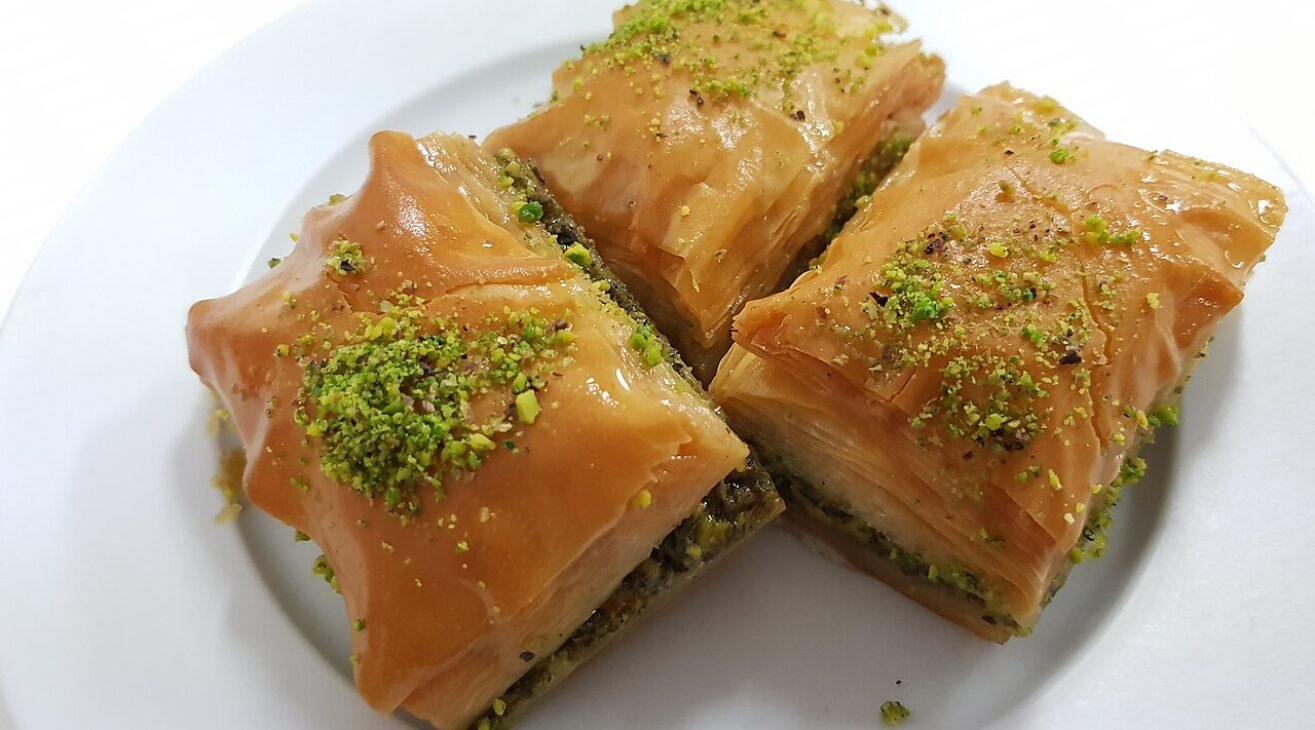
Gaziantep is famous for baklava made with locally grown pistachios. In 2013 Antep baklavası became the first Turkish product registered by the EU as a protected geographical indication. A proper Antep tray is pale gold on top, with pistachio running through the middle and a light syrup.
Other shapes and styles
Walnut baklava (cevizli) is common across Turkey, and on the Black Sea coast hazelnuts are often used. Other shapes include havuç dilimi (‘carrot slice’ wedges), şöbiyet (triangles filled with kaymak cream as well as nuts), sarma (rolls) and soğuk baklava (‘cold baklava’), made with milk instead of syrup and served chilled.
Ingredients
Makes about 30 pieces in a 30 x 20cm baking tin.
For the pastry and filling
- 2 x 270g packs filo pastry (about 14 sheets), defrosted if frozen
- 200g unsalted butter
- 250g shelled unsalted pistachios (or walnuts)
- 1 tbsp caster sugar
For the syrup
- 300g granulated sugar
- 250ml water
- 1 tsp lemon juice
To finish
- 1 tbsp finely ground pistachios
How to make baklava
1. Make the syrup first
Put the sugar and water in a pan, stir over a medium heat until dissolved, then simmer without stirring for 8–10 minutes until slightly thickened. Add the lemon juice, simmer 1 minute more and leave to cool completely. The syrup must be cold when the baklava comes out of the oven.
2. Clarify the butter
Melt the butter gently, let it settle for a few minutes, then skim off the foam and pour the clear yellow butter into a bowl, leaving the milky solids behind. You should have about 160g. Clarified butter gives a crisper, longer-keeping baklava.
3. Prepare the nuts and filo
Pulse the pistachios with the sugar until finely chopped but not powdery. Heat the oven to 180°C (160°C fan). Trim or halve the filo sheets to fit your tin; you want about 28 layers in all. Keep the stack under a tea towel.
4. Layer the bottom
Brush the tin with butter. Lay down one sheet of filo, brush lightly with butter and repeat until you have 14 layers. Scatter the pistachios evenly over the top and press down gently.
5. Layer the top and cut
Add the remaining 14 sheets, buttering each one, and brush the final layer generously. With a sharp knife, cut all the way through into diamonds or squares, about 5cm across. Spoon any remaining butter over the cuts.
6. Bake
Bake on the middle shelf for 45–50 minutes, until deep golden and crisp. If the top browns too quickly, lower the heat to 170°C (150°C fan) for the last 15 minutes.
7. Syrup and rest
As soon as the tray comes out, ladle the cold syrup evenly over the hot baklava. It should sizzle. Leave uncovered at room temperature for at least 4 hours, ideally overnight, before sprinkling with ground pistachio and serving.
Watch: how to make baklava
This video walks through the layering and cutting, which are worth seeing before you start.
Tips for the best baklava
- Hot baklava, cold syrup (or the other way round). If both are hot, the pastry goes soggy; if both are cold, the syrup will not soak in.
- Brush the butter on lightly and evenly. Too much makes it greasy, too little and the layers stick together.
- Cut before baking. Cutting a baked, syruped tray crushes the layers.
- Do not cover or chill baklava while it rests. Store it loosely covered at room temperature for up to 5 days.
- Buy pistachios from a Turkish or Middle Eastern grocer; they are greener and better value than supermarket bags.
What to serve with baklava
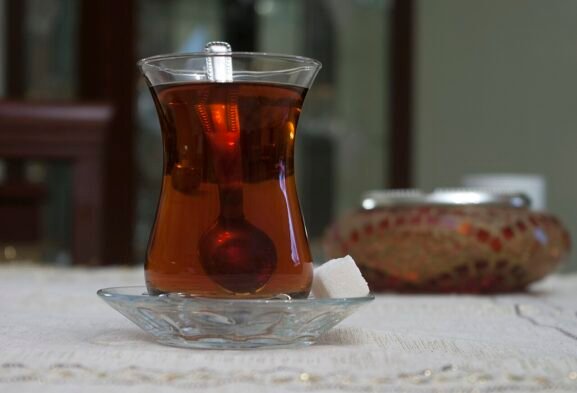
Serve baklava with a small cup of Turkish coffee or a glass of tea, and a spoonful of kaymak (Turkish clotted cream) or vanilla ice cream if you like. For a dessert spread, put it out with sütlaç (baked rice pudding), or follow a grill dinner of Adana kebab with a few pieces.
Where to eat baklava in London
London has a good number of Turkish baklava shops and pastry cafés, many baking their own trays daily. Browse our desserts and baklava listings and read our guide to the best baklava in London.
- Mehmet Efendi 1953 Whitechapel – Turkish desserts & baklava in Whitechapel
- Şehr-i Antep Enfield – Turkish desserts & baklava in Enfield
- AntepHan Baklava & Künefe – Turkish desserts & baklava in Enfield
- Kahve Dünyası Piccadilly – Turkish desserts & baklava in Soho & West End
- Ayintap Pastanesi – Turkish bakery & börek in Edmonton
- Pera Artisan Patisserie – Turkish bakery & börek in Harringay & Green Lanes
See all 15 Desserts & Baklava places in London
Baklava FAQs
Why is my baklava soggy?
Usually because the syrup and baklava were both hot, or there was too much syrup. Pour cold syrup over hot baklava, and leave it uncovered to rest so steam can escape.
Is baklava Turkish or Greek?
Both countries, and many others from the Balkans to the Middle East, have their own baklava traditions. The layered version most people know today probably developed in the imperial kitchens of Topkapı Palace in Istanbul.
Can I use walnuts instead of pistachios?
Yes. Walnut baklava is very common in Turkey. Use the same weight, chopped a little coarser, and add ½ tsp ground cinnamon if you like.
How long does homemade baklava keep?
Up to 5 days at room temperature, loosely covered. Do not refrigerate it, as the fridge makes the pastry chewy and the syrup crystallise.
Photo: Maksym Kozlenko, CC BY-SA 4.0, via Wikimedia Commons.