
Kısır recipe: spicy Turkish bulgur salad with pomegranate molasses
Kısır is the salad every Turkish household makes when friends are coming over. Fine bulgur is softened in hot water, then kneaded with tomato and pepper paste until it turns a deep orange-red, sharpened with lemon and nar ekşisi (pomegranate molasses) and tossed with spring onions, parsley and mint. It is tangy, gently hot and very moreish, scooped up with crisp lettuce leaves.
It is often compared to tabbouleh, but the balance is the other way round: in kısır the grain leads and the herbs follow. It also needs no cooking at all, just a kettle and a bowl of fine bulgur, the cracked, par-cooked wheat that is a staple of Turkish kitchens.
What is kısır?
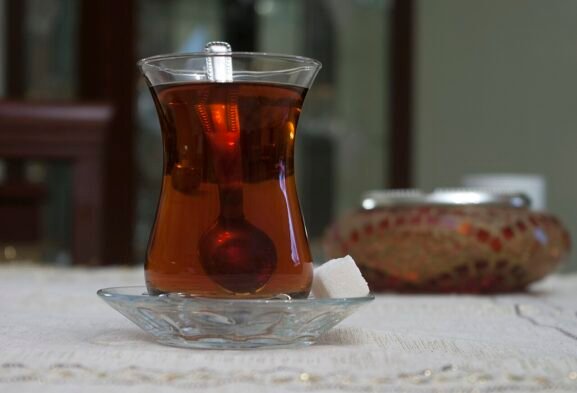
Kısır is a cold bulgur salad served as a meze, a side dish or a light lunch. It is a favourite for afternoon tea gatherings with friends and neighbours, where it sits alongside börek and cakes, and it is often served with lettuce leaves for scooping.
Regional styles
Kısır changes from kitchen to kitchen. Some versions are fiery with hot pepper paste and pul biber and sour with plenty of pomegranate molasses; others are milder and add chopped cucumber, green pepper or, in some regions, garlic. Some cooks stir in a handful of walnuts or pomegranate seeds for crunch.
Kısır and tabbouleh
Lebanese tabbouleh is mostly parsley, with a little bulgur. Kısır is mostly bulgur, with herbs, and is coloured and seasoned with pastes. Both use fine bulgur and both are best eaten cold.
Ingredients
Serves 6 as a side or meze.
For the bulgur
- 250g fine bulgur (köftelik bulgur)
- 250ml boiling water
- 2 tbsp tomato paste
- 1 tbsp Turkish red pepper paste (biber salçası), hot or mild
For the dressing
- 60ml extra virgin olive oil
- 3 tbsp pomegranate molasses (nar ekşisi)
- Juice of 1 lemon (about 3 tbsp)
- 1 tsp ground cumin
- 1 tsp pul biber (Turkish chilli flakes)
- 1 tsp dried mint
- 1 tsp salt
For the vegetables and herbs
- 6 spring onions, finely sliced
- 2 medium tomatoes, finely diced
- 30g flat-leaf parsley, finely chopped
- 10g fresh mint leaves, finely chopped
- 1 Little Gem or romaine lettuce, leaves separated, to serve
How to make kısır
1. Soak the bulgur
Put the bulgur in a large bowl, pour over the boiling water, stir once, cover with a plate and leave for 15–20 minutes until the water is absorbed and the grains are tender. If it is still hard, add 2–3 tbsp more hot water and wait 5 minutes.
2. Knead in the pastes
While the bulgur is still warm, add the tomato paste and pepper paste. Knead them in with your hands (wear a glove if the pepper paste is hot) for 2–3 minutes, rubbing the grains between your fingers, until every grain is evenly coloured. This is what gives kısır its colour and depth.
3. Add the dressing
Pour in the olive oil, pomegranate molasses and lemon juice, then add the cumin, pul biber, dried mint and salt. Mix well and leave to cool to room temperature.
4. Add the fresh ingredients
Fold in the spring onions, tomatoes, parsley and fresh mint. Taste and adjust: it should be clearly sour, a little hot and well salted. Add more lemon or molasses as needed.
5. Rest and serve
Leave for 20 minutes for the flavours to settle, or chill until needed. Pile into a bowl or shape into small mounds and serve with lettuce leaves for scooping.
Watch: how to make kısır
This video shows how the pastes are worked into the bulgur and how the finished texture should look.
Tips for the best kısır
- Use fine bulgur, not coarse pilaf bulgur. Coarse grains stay chewy and do not absorb the dressing.
- Knead the pastes in while the bulgur is warm; it soaks up colour and flavour much better.
- Pomegranate molasses varies a lot in sharpness. Add it gradually and taste as you go.
- Add the herbs and tomatoes after the bulgur has cooled, so they stay fresh and green.
- Kısır keeps for 2 days in the fridge and often tastes better on day two. Refresh with a squeeze of lemon before serving.
- Look for Turkish pepper paste labelled acı (hot) or tatlı (mild) at a Turkish grocer. Mild paste with extra pul biber lets you control the heat more easily.
What to serve with kısır
Kısır belongs on a meze table with yaprak sarma, sigara böreği and a bowl of garlicky yoghurt. It is also a good side for grilled meat: try it with tavuk şiş or ızgara köfte.
Where to eat kısır in London
Kısır turns up on cold meze counters in Turkish restaurants and lokantas around London. Browse our meze and fine dining listings, or read our Green Lanes food guide for an area where meze counters are everywhere.
- ET House Turkish Restaurant – Turkish meze & fine dining in Camden & Kentish Town
- Lokma Bermondsey – Turkish meze & fine dining in Bermondsey
- Deman New Barnet – Turkish meze & fine dining in Barnet
- Hisar Meze Bar Beckenham – Turkish meze & fine dining in Beckenham
- Iznik – Turkish home cooking in Highbury
- Galata Pera – Turkish meze & fine dining in Brentford
See all 95 Meze & Fine Dining places in London
Kısır FAQs
What does kısır mean?
The word kısır literally means ‘barren’ or ‘infertile’ in Turkish. There is no agreed explanation of how the salad got its name, and in the kitchen the word simply means this dish.
Can I make kısır without pomegranate molasses?
Yes, though you lose some of its character. Use extra lemon juice with 1 tsp honey or sugar to balance the sourness.
Is kısır gluten-free?
No. Bulgur is made from wheat. For a gluten-free version, use cooked quinoa or buckwheat, though the texture will be different.
Is kısır served hot or cold?
Cold or at room temperature. It is a make-ahead dish, which is one reason it is so popular for gatherings.
Photo: Noumenon, CC BY-SA 3.0, via Wikimedia Commons.