Is Turkish food spicy? A guide to heat and how to order
Is Turkish food spicy? Mostly not, at least not the way Thai or Indian food can be. A lot of Turkish cooking is built on grilled meat, olive oil, yoghurt, herbs and tomato, with chilli as a seasoning rather than the main event. There are real exceptions, though, mostly from the south-east, and a few dishes on any London menu that can catch you out.
The word to know is acı (hot). Turkish shops sell chilli flakes as acı or tatlı (mild), and the same split applies when you order: ask for acılı if you want heat, acısız if you do not.
The chillies behind Turkish heat
Pul biber and Maraş biber
Pul biber just means “flake pepper”: the red chilli flakes in a pot on the kebab table, next to the salt and sumac. The best known comes from Kahramanmaraş. It is deep red and slightly oily, with a medium heat that builds slowly and a fruity, almost sun-dried tomato flavour.
İsot (Urfa biber)
İsot comes from Şanlıurfa. The peppers are dried in the sun by day and wrapped up to sweat at night, which turns the flakes a dark purple-black and gives them a raisin-like, faintly smoky taste, though they are not smoked. The heat is moderate and slow. You will find it in çiğ köfte and sprinkled over lahmacun.
Biber salçası (pepper paste)
The jar a London shopper is most likely to meet. Biber salçası is a thick red pepper paste, sold as tatlı (sweet) or acı (hot) in Turkish grocers. It goes into stews, köfte, bulgur dishes and spreads such as muhammara. If a home-style dish tastes warm rather than hot, hot pepper paste is usually why.
Where is Turkish food hottest?
Heat follows the map. The south-east, around Adana, Urfa, Antep and Maraş, is where the chilli lives, and its kebabs and meze have travelled furthest. As a rule of thumb, a dish named after Adana or Urfa will carry more pepper than the rest of the menu. The Black Sea and Aegean kitchens, by contrast, barely use chilli at all.
On a London menu: what to expect
A quick heat guide to the dishes you will see most often in London Turkish restaurants:
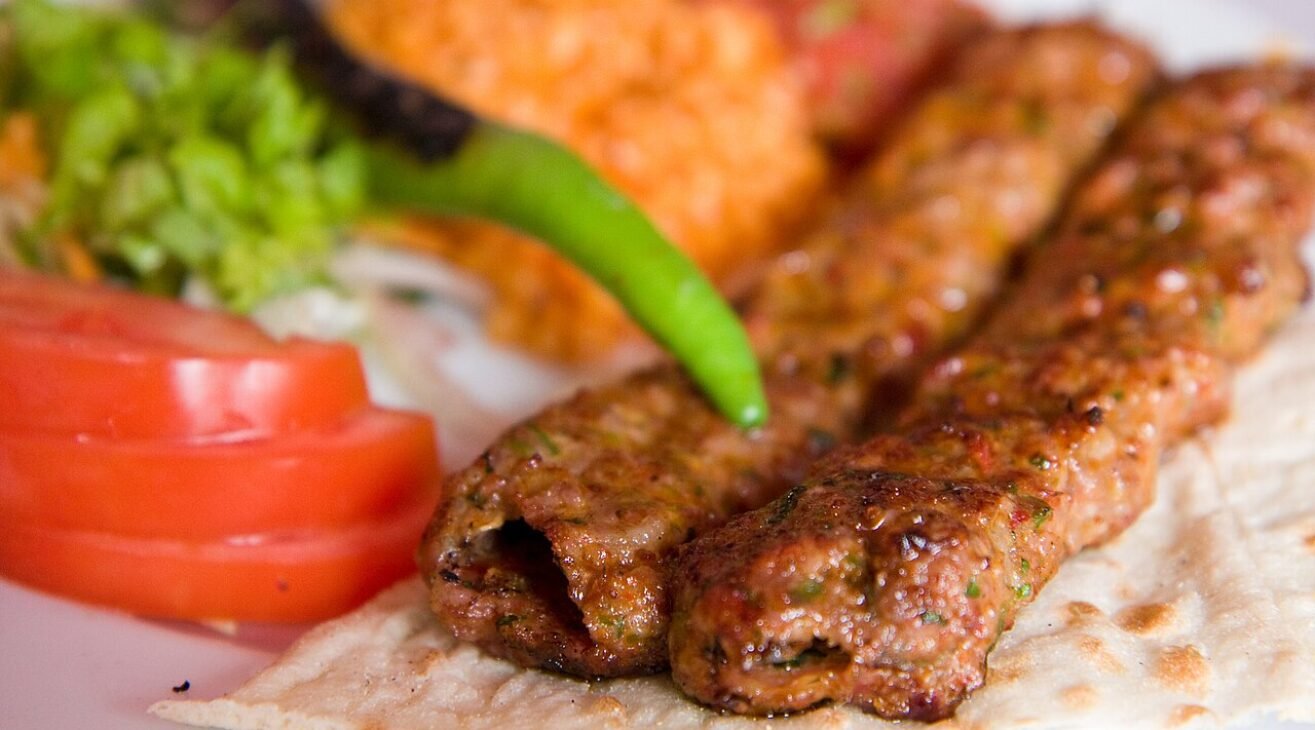
- Adana kebab: hot. Hand-minced lamb mixed with chilli flakes and red pepper. Some places will make it milder if you ask; otherwise order Urfa. See our Adana kebab recipe.
- Urfa kebab: mild. The same skewer of minced meat, without the chilli. The safe choice if you want the flavour of the grill without the burn.
- İskender: not hot. Rich rather than spicy: döner on bread with tomato sauce, butter and yoghurt.
- Lahmacun: mild to medium. Some places make it with a little chilli in the topping. Ask for acılı if you want more, and add lemon and parsley either way.
- Acılı ezme: hot. The finely chopped tomato, pepper and chilli salad that comes before the grill. The name tells you: acılı means hot. See our acılı ezme recipe.
- Çiğ köfte: warm. Bulgur kneaded with isot and pepper paste, wrapped in lettuce. A slow, building warmth rather than a sharp kick. See our çiğ köfte recipe.
- The onion salad with sumac: not hot. The red stuff on the sliced onions is sumac, which is sour and lemony, not chilli.
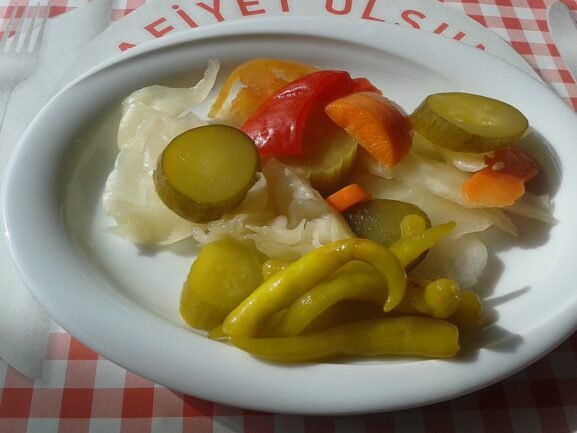
- Pickled green chillies: often hot. The ones that come free with your kebab can be fierce. Bite the tip first. Our guide to Turkish pickles explains more.
- Sucuk: mild to hot. The spiced sausage at breakfast or in a toastie varies by maker.
Flavour without the heat
Turkish cooking gets its character from much more than chilli. Sumac brings sourness, dried mint and oregano bring an herby lift, cumin goes into köfte, and yoghurt, lemon and garlic do a lot of the work. The result is food that tastes seasoned and bright without hurting.
Which dishes are mild?
Most of them. Lentil soup, stuffed vine leaves, aubergine dishes in olive oil, chicken şiş, pide, gözleme, mantı with yoghurt and almost all the desserts carry little or no heat. In general, chilli is something you add at the table, not something baked into the dish. For a full run-down, see our guide to popular Turkish dishes.
Heat at the table
At most kebab restaurants a pot of pul biber sits beside the salt, sumac and dried oregano, so you control a lot of the heat yourself. Batches vary a lot, so taste a small pinch before you shake it over everything.
How to ask for less (or more) heat
- Acısız olsun, lütfen: “without heat, please.”
- Az acılı: a little hot.
- Acılı olsun: hot, please.
- Acı biber var mı? Do you have hot pepper? Useful for adding your own.
At an ocakbaşı (the open-grill restaurant where you can sit near the fire) the grill cook may ask whether you want your kebab acılı or acısız. Say which, and ask for chilli and pickled peppers on the side so everyone at the table can choose.
What to order in London, mild or hot
For the hot end of the range, look at our ocakbaşı and grill restaurants and our best ocakbaşı guide, and order Adana kebab with acılı ezme. For a gentle start, go for chicken şiş, lentil soup and a few cold meze, and add chilli at the table.
Our pick: Adana Ocakbaşı Meze & Bar, Dalston
A charcoal grill on Stoke Newington Road named after Adana, with Adana kebab on the menu alongside Antep lahmacun and kuşbaşılı pide. Worth a visit if you want to try the kebab that has the reputation for heat and see for yourself how much of it you like. See Adana Ocakbaşı Meze & Bar on Turkish Dish.
- Dem Restaurant – Turkish meze & fine dining in Crystal Palace
- Damak Ocakbaşı – Turkish ocakbaşı & grill in Enfield
- Delight Kitchen – Turkish kebab & döner in Walthamstow
- Antalya Restaurant – Turkish meze & fine dining in Bloomsbury & Holborn
- Cirrik 19 Numara Bos – Turkish ocakbaşı & grill in Dalston & Stoke Newington
- Baraka London – Turkish meze & fine dining in City of London
See all 199 Ocakbaşı & Grill places in London
Common questions about spice in Turkish food
Is Turkish food hot or mild?
Mostly mild to medium. Heat appears in specific dishes such as Adana kebab, acılı ezme and çiğ köfte, and in the south-east of Turkey.
Is Adana kebab very spicy?
It is the best-known chilli-spiced kebab, and the heat is real. Ask for acısız if you want it mild, or order a different kebab.
What is the difference between acı and acısız?
Acı means hot or spicy. Acısız means without heat.
What is isot?
İsot is dark, slightly moist chilli flake from Şanlıurfa, with a smoky, raisin-like taste and a medium, slow-building heat. It is a key flavour in çiğ köfte.
What can I drink to cool the heat?
Ayran, the salted yoghurt drink, is the usual partner for kebab and a good choice if a dish is hotter than you expected. Plain yoghurt and bread on the table help too.
Photo: Garrett Ziegler, CC BY-SA 4.0, via Wikimedia Commons.