What is turşu? A guide to Turkish pickles and şalgam
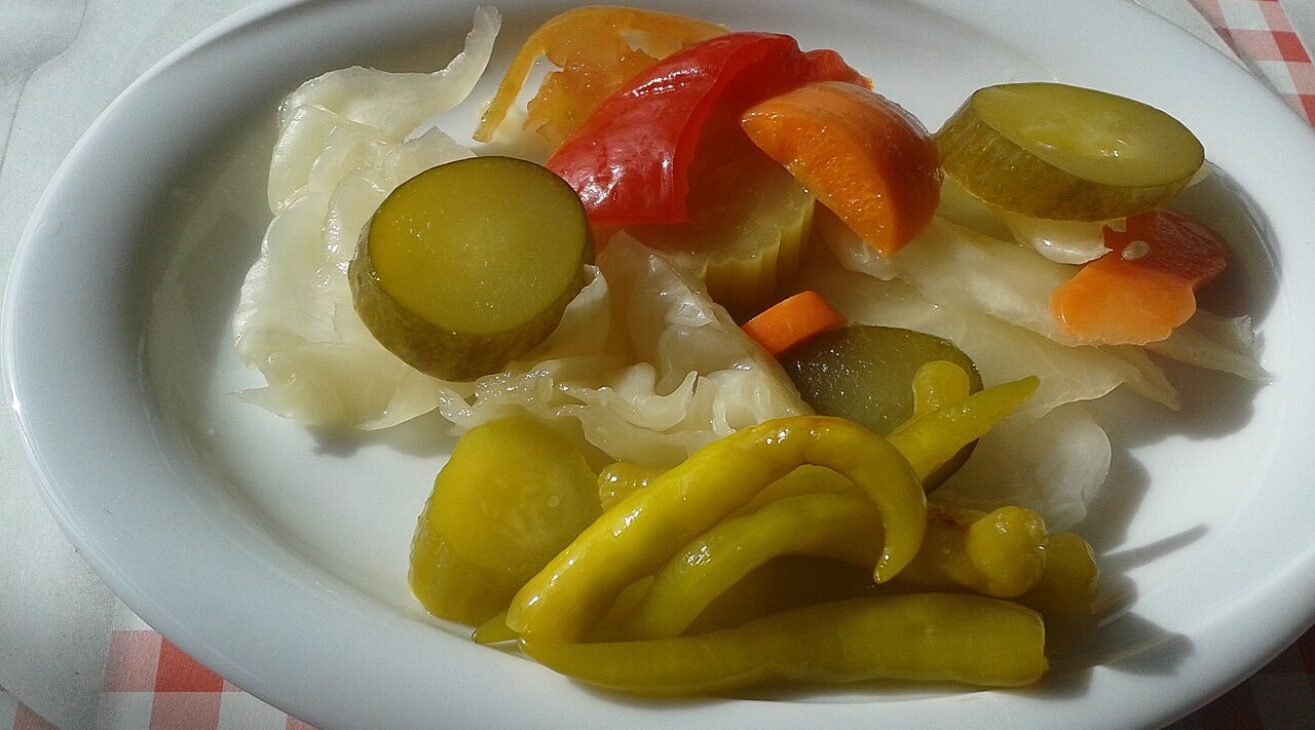
Turşu (say “toor-SHOO”) is the Turkish word for pickles: vegetables, and now and then fruit, kept in salted brine, usually with garlic. The word comes from the Persian torshi, and a Turkish pickle plate can hold anything from cucumbers and peppers to cabbage and green tomatoes.
In London you meet it at the grill. Order a kebab at most ocakbaşı places and a small plate of pickled chillies, sometimes with pickled red cabbage, comes to the table without you asking. The purple drink on the next table is şalgam, which is a different thing again.
What is turşu?
A sharp, salty side that cuts through grilled, fried and rich food. Turks eat it with meat, soups, stews and meze, and plenty of people pick at it on its own. Most turşu is a plain brine pickle: vegetables, garlic and salted water, left for a week or two until sour. Some cooks add a splash of vinegar to speed it up and keep it crisp.
The main types of Turkish pickles
Almost any vegetable can go in the jar, and what is on offer changes with the season. The ones you will see most:
- Salatalık turşusu (cucumber): the everyday one, good in sandwiches and with meze.
- Biber turşusu (peppers): usually the long green chillies that come with kebabs, and often hot.
- Lahana turşusu (cabbage): a winter favourite.
- Yeşil domates turşusu (green tomato).
- Mixed turşu (karışık): a jar or plate of several vegetables, common on meze tables.
- Carrots, garlic cloves and green plums also turn up, depending on the shop.
What is turşu suyu?
Turşu suyu is the brine itself, and in Turkey people drink it. In Istanbul it is sold by the glass from pickle shops and street carts, often turned pink or red by beetroot or red carrot in the jar, and handed over with a few pickles to chew on. It is sour, salty and bracing, so a small glass is plenty the first time. In London you are more likely to drink the brine from a jar at home than find it sold by the glass.
Şalgam: the purple drink that is not pickle juice
People mix the two up. Şalgam (şalgam suyu) is a fermented drink from the south of Turkey, above all Adana and Mersin. It is made from purple carrots, a little turnip, bulgur and salt, fermented in barrels for a week or two. The result is deep purple, sour and slightly earthy. It comes acılı (hot, with chilli) or acısız (not hot), so say which you want.
Its natural partner is kebab, especially a spicy Adana, and in Turkey it is also drunk alongside rakı. Several London grills list it on their drinks menu next to ayran, including Dostlar Ocakbaşı on Hertford Road and Kelebek Ocakbaşı. In Turkish grocers it is sold in bottles and cartons; Doğanay is a brand you will often see, though stock varies from shop to shop.
How turşu is served with Turkish food
- With kebab and döner, as a sour, crunchy break from the meat.
- On meze tables, where mixed turşu sits beside olives and cheese.
- With soups and stews, especially in winter.
- In a sandwich or wrap, where cucumber pickles add bite.
If you like the idea, look at our guide to döner, shawarma and gyros and our haydari recipe, a classic meze that pickles sit beside.
Making a jar at home
Cucumber turşu is the easiest place to start:
- Pack small, firm cucumbers (the short Lebanese or “mini” kind) into a clean jar with a few peeled garlic cloves, a sprig of dill and a small handful of dried chickpeas, which help the ferment along.
- Dissolve 1 tablespoon of salt in every 500ml of water. Some cooks add 2 to 3 tablespoons of vinegar per jar for a sharper, crisper pickle.
- Pour the brine over so the vegetables are fully covered, weigh them down if they float, and close the lid.
- Leave at cool room temperature, out of the sun, for 1 to 2 weeks, tasting from day 7.
- Once they taste right, keep the jar in the fridge.
Buying and ordering turşu in London
At a London grill, the pickled chillies are usually free with your meal and topped up if you ask. Mixed turşu, when it is on the menu, is ordered as a cold meze, and şalgam as a drink. Ask for it acılı if you want the chilli version.
For a jar at home, Turkish grocers and delis stock mixed turşu, cucumbers, peppers and cabbage, and most have şalgam on the shelf or in the fridge. Read the label: some jars are brine only, some are vinegar pickles, and pepper pickles range from mild to fierce. If a jar is not marked, ask whether the peppers are hot.
Browse the Turkish grocers and delis on Turkish Dish, and read our guide to Turkish grocers in London before you shop. To taste pickles the way they are meant to be eaten, have them beside an Adana kebab, or work through our popular Turkish dishes list.
Our pick: Akdeniz, Stoke Newington
A Turkish supermarket on Stoke Newington High Street. It stocks the basics of a Turkish kitchen, including olives, beyaz peynir, bulgur, spices and çay, so it is a handy place to browse the shelves when you are putting together a Turkish table at home. See Akdeniz on Turkish Dish.
- Kingston Food Centre – Turkish grocers & delis in Kingston
- Erdem – Turkish grocers & delis in Crouch End & Hornsey
- Elif Food Centre Manor Park – Turkish grocers & delis in Manor Park
- Turkish Deli Borough – Turkish grocers & delis in Borough & Southwark
- Ekin Food Centre – Turkish grocers & delis in Tottenham
- Blue Istanbul Supermarket – Turkish grocers & delis in Bermondsey
See all 12 Turkish Grocers & Delis places in London
Turşu questions, answered
What is turşu in English?
Pickles. It covers vegetables pickled in salted brine, usually with garlic and sometimes with vinegar.
Is turşu suyu the same as şalgam?
No. Turşu suyu is the brine from a jar of pickles. Şalgam is its own fermented drink, made from purple carrots, turnip and bulgur.
Are the pickles free at Turkish restaurants?
At most London grills, a small plate of pickled chillies comes free with kebabs. A full plate of mixed turşu is usually a menu item.
Do Turkish pickles contain alcohol?
Şalgam is fermented, so it contains a trace of alcohol, as any naturally fermented brine pickle can. The amount is tiny, but ask if you need to avoid it completely.
Photo: E4024, CC BY-SA 4.0, via Wikimedia Commons.