Musa Dağdeviren: the chef behind Çiya and Turkey’s regional cooking
Musa Dağdeviren is the cook behind Çiya, a small group of restaurants in Kadıköy, on the Asian side of Istanbul. He is not interested in reinventing Turkish food. For more than three decades he has done something rarer: travelled, listened and cooked dishes from across Anatolia that were slipping out of memory, then put them on the counter for anyone to try. The cooking historian Özge Samancı has called him “not only a chef, but a food anthropologist”, and describes Çiya as “a food museum” (Hürriyet Daily News).
Many people outside Turkey first came across him in 2018, when Netflix’s Chef’s Table gave him an episode of his own – the first time the series had featured a Turkish chef. His book for Phaidon, The Turkish Cookbook, collects 550 recipes written for home cooks (Phaidon). If you want to understand Turkish food beyond the kebab and the takeaway menu, his is the name to start with.
Early life and career
Nizip and the bakery
Dağdeviren was born in 1960 in Nizip, a district of Gaziantep in south-eastern Turkey, the youngest of six children (Hürriyet Daily News). He learned recipes and techniques from his mother and started working in his uncle’s bakery at the age of five (Phaidon). He grew up working in the family’s bakeries in Nizip, and later left for Istanbul, where his uncles ran restaurants.
The first Çiya
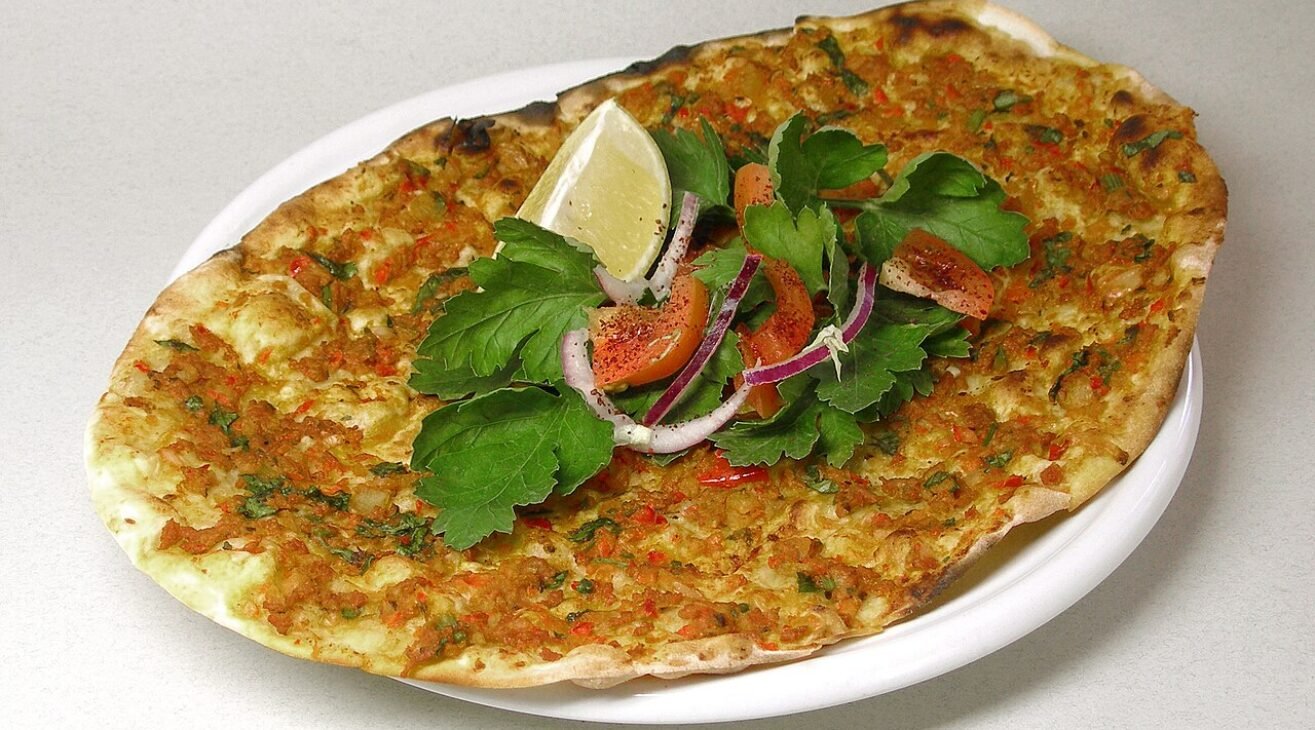
After his military service he opened the first Çiya with childhood friends (Hürriyet Daily News). Phaidon dates it to 1986: a six-table diner opened with four friends, which he later came to own outright. At the time, Hürriyet Daily News points out, simple regional food such as kebabs and lahmacun (thin flatbread topped with spiced minced meat) was not given much respect – and he played Bach, Chopin and Vivaldi in the background to make the point that it deserved it.
Restaurants
Çiya Sofrası, Kadıköy, Istanbul
Sofra means a laid table, and Çiya Sofrası is where Dağdeviren’s research ends up on the plate. He opened it in 1998 on the same street as the original restaurant, with a new idea: to serve little-known regional dishes (Phaidon). Culture Trip describes the food as regional Turkish dishes made with seasonal ingredients and traditional cooking methods. The word çiya has several meanings, Phaidon notes, among them “spark” in Laz and “mountain” in Kurdish (Phaidon).
Çiya Kebap, Kadıköy, Istanbul
Çiya Kebap, also in Kadıköy, is the group’s kebab house; Phaidon dates the opening of his kebab restaurant to the turn of the century. Dağdeviren also has his own farm, which grows fruit and vegetables for the restaurants (Phaidon).
Cooking style and signature dishes
What sets Dağdeviren apart is restraint. He does not want to modernise Turkish cuisine; he wants to keep alive the traditions he has watched disappear (Phaidon). That means dishes cooked with seasonal ingredients and traditional methods, the way they are made in the places they come from (Culture Trip), rather than reworked for a tasting menu.
He is also wary of food being used as a flag. In the introduction to The Turkish Cookbook he writes that “the world is an open table”, arguing for living together rather than drawing lines between cultures (Phaidon). In his Chef’s Table episode he shows young chefs how to make ferdali, a dish Phaidon describes as a precursor to the kebab – a neat summary of his approach: go back to the roots and cook from there.
Books, TV and online
- Yemek ve Kültür (Food and Culture) – the quarterly magazine he founded and publishes (Phaidon).
- Çiya Yayınları – his publishing house, founded in 2005 (Phaidon), which has reprinted the first Ottoman-Turkish cookbook and other books on Anatolian food.
- The Turkish Cookbook (Phaidon) – 550 recipes for home cooks, with sections including appetisers and fruit and vegetables.
- Chef’s Table, season 5 – his episode was released on Netflix on 28 September 2018 (Metacritic).
Watch
Dağdeviren talks about The Turkish Cookbook and his life’s work in this talk.
Where to eat food like this in London
London has no Çiya, but the city’s regional Anatolian restaurants and lokanta-style home-cooking spots (a lokanta is an everyday restaurant serving ready-cooked dishes) are the nearest thing. Our guide to popular Turkish dishes is a good primer, and you can cook in the same spirit at home with our red lentil soup or yaprak sarma (stuffed vine leaves).
- Gokoreç Enfield – Turkish regional anatolian in Enfield
- Gokoreç Edmonton – Turkish regional anatolian in Edmonton
- KİD – Turkish meze & fine dining in Soho & West End
- Lokal – Turkish meze & fine dining in Soho & West End
- Pide & Co – Turkish gözleme & mantı in Bloomsbury & Holborn
- Hatay Restaurant – Turkish meze & fine dining in Raynes Park
See all 9 Regional Anatolian places in London
Quick facts
- Born: 1960, Nizip, Gaziantep, Turkey
- Based in: Kadıköy, Istanbul
- Known for: recording and cooking little-known regional Anatolian dishes
- Restaurants: Çiya Sofrası and Çiya Kebap, Kadıköy
- Book: The Turkish Cookbook (Phaidon), 550 recipes
- TV: Chef’s Table season 5 (Netflix, 2018)
Further reading
- Anatolian dishes expand to Netflix – Hürriyet Daily News
- Meet Musa Dağdeviren, the saviour of Turkish cuisine – Phaidon
- How well do you know the author of The Turkish Cookbook? – Phaidon
- Istanbul’s top celebrity chefs – Culture Trip
Pictured: lahmacun. Photo: Rainer Zenz, CC BY-SA 3.0, via Wikimedia Commons.