
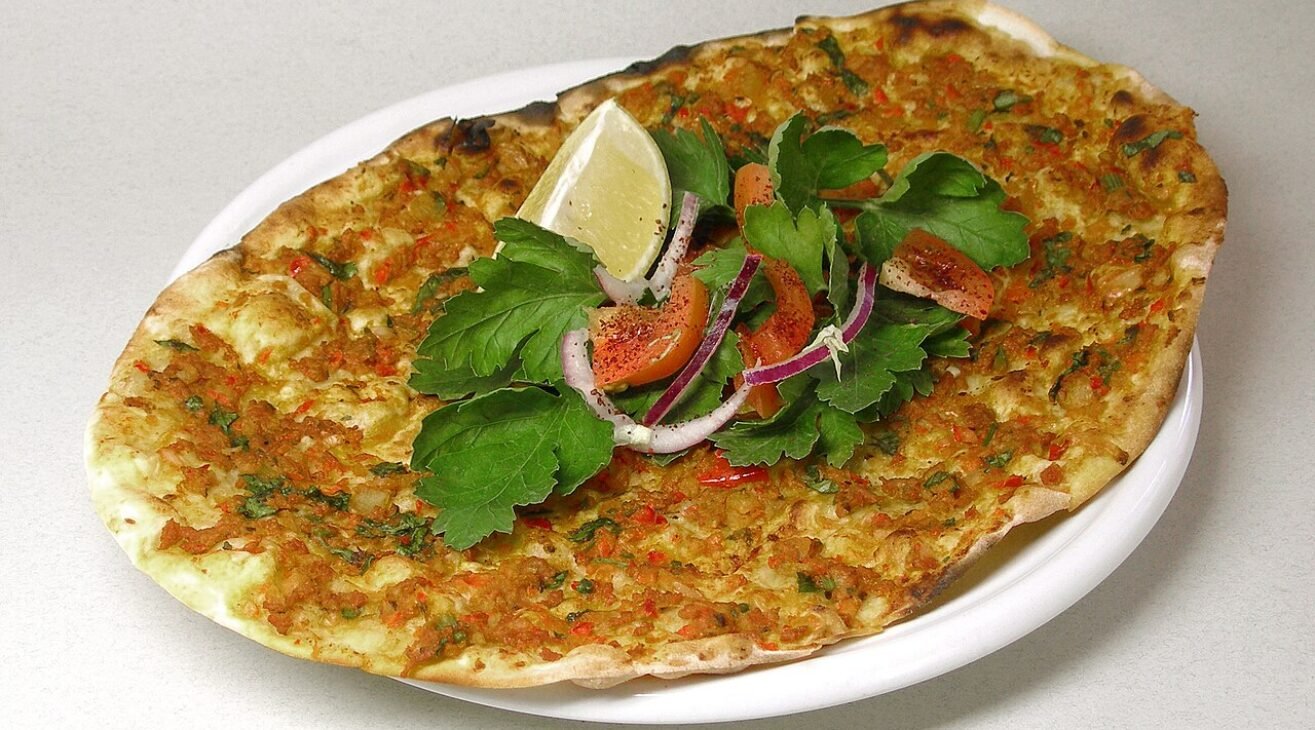
Lahmacun recipe: crisp Turkish flatbread with spiced lamb
Lahmacun is the thin, crisp flatbread you see being pulled from wood-fired ovens in every Turkish pide house: a base rolled almost paper-thin, spread with a raw paste of minced lamb, onion, tomato, pepper and parsley, then blasted in a fierce oven for a few minutes. It comes to the table with lemon wedges and a heap of herbs, and you squeeze, fill, roll and eat it in about four bites.
People often call it Turkish pizza, but there is no cheese and no sauce, and the texture is closer to a cracker that bends. The name comes from the Arabic for “meat with dough”, and the dish has deep roots across the Levant, Armenia and southeastern Turkey, as the Wikipedia entry on lahmacun sets out. This home version uses a domestic oven turned up to its maximum and a hot baking tray, and it gets you very close to the real thing.
What is lahmacun?
Lahmacun (pronounced lah-ma-jun) is a flatbread topped with a finely minced meat and vegetable paste, baked until the edges blister. In Turkey it was long associated with the southeast, especially Gaziantep and Şanlıurfa, before spreading to Istanbul and the rest of the country in the second half of the twentieth century. Today it is eaten everywhere, from street stalls to late-night ocakbaşı (charcoal grill) restaurants, where it is often ordered as a starter before the kebabs.
Antep and Urfa styles
The two best-known regional versions differ mainly in the topping. Antep lahmacun, from Gaziantep, is known for its garlic, and in 2025 the EU registered Antep lahmacunu as a protected geographical indication. Urfa lahmacun leans on onion and the dark, smoky isot pepper. Over the border, Armenian lahmajo and the lahmacun of Aleppo add their own touches, such as pomegranate molasses. A good overview of how lahmacun is eaten in Istanbul today is on Istanbul.com.
Ingredients
Makes 8 lahmacun, enough for 4 people as a main or 8 as a starter.
For the dough
- 400g strong white bread flour, plus extra for rolling
- 7g sachet fast-action dried yeast
- 1 tsp caster sugar
- 1 tsp fine salt
- 250ml lukewarm water
- 2 tbsp olive oil
For the topping
- 250g lamb or beef mince (about 20% fat)
- 1 medium onion (about 150g), roughly chopped
- 2 garlic cloves
- 1 red Romano pepper (about 120g), deseeded and roughly chopped
- 2 medium tomatoes (about 200g), roughly chopped
- 20g flat-leaf parsley, leaves and thin stalks
- 1 tbsp Turkish red pepper paste (biber salçası)
- 1 tbsp tomato purée
- 1 tsp pul biber (Turkish chilli flakes)
- 1 tsp sweet paprika
- ½ tsp ground cumin
- 1 tsp salt
- ½ tsp black pepper
To serve
- 2 lemons, cut into wedges
- 1 red onion, thinly sliced and tossed with 1 tsp sumac
- A large handful of parsley leaves
- Little Gem lettuce leaves or sliced tomatoes (optional)
How to make lahmacun
1. Make the dough
Mix the flour, yeast, sugar and salt in a large bowl. Add the water and olive oil and bring together, then knead on a lightly floured surface for 8–10 minutes until smooth and springy. Return to the oiled bowl, cover and leave somewhere warm for about 1 hour, until doubled.
2. Make the topping
Put the onion, garlic, red pepper, tomatoes and parsley in a food processor and pulse to a coarse, wet paste. Tip it into a sieve and press out the excess juice, otherwise the bases go soggy. Mix the paste with the mince, pepper paste, tomato purée, spices, salt and pepper until evenly combined. The topping goes on raw.
3. Heat the oven
Put two large baking trays (or a pizza stone) in the oven and heat it as high as it will go, ideally 250°C (230°C fan), for at least 30 minutes. A very hot surface is what gives lahmacun its crisp edges.
4. Roll out the bases
Knock back the dough and divide it into 8 pieces of about 85g. Roll into balls and rest for 10 minutes under a tea towel. Roll each one out on a floured surface into a thin round or oval about 25cm across, 1–2mm thick. Lay them on squares of baking paper.
5. Spread and bake
Spread about 3 tablespoons of topping over each base in a very thin layer, right to the edges, pressing it into the dough with your fingertips. Slide two at a time, on their paper, onto the hot trays and bake for 6–8 minutes, until the edges are crisp and browned and the meat is cooked through.
6. Serve
Stack the cooked lahmacun face to face as they come out, which keeps them soft enough to roll. Serve straight away with lemon wedges, sumac onions and parsley: squeeze over the lemon, scatter the salad down the middle, roll up and eat with your hands.
Watch: how to make lahmacun
If you want to see how thin the dough should be and how the topping is spread, this video shows the whole process.
Tips for the best lahmacun
- Roll thinner than feels right. The base shrinks back a little in the oven, and a thick lahmacun turns bready rather than crisp.
- Drain the vegetable paste well. Tomatoes and peppers release a lot of water, and a wet topping steams the dough instead of crisping it.
- Use mince with some fat in it. Very lean meat dries out in a hot oven; around 20% fat keeps the topping juicy.
- Preheat properly. Give the oven and trays a full 30 minutes; the base should sizzle the moment it touches the metal.
- Make the topping ahead. It keeps covered in the fridge for up to a day, and the flavour improves.
- Freeze leftovers flat between sheets of baking paper, then reheat from frozen in a hot oven for 4–5 minutes.
What to serve with lahmacun
Lahmacun is often the opening act of a bigger meal. Serve it before a plate of Adana kebab or ızgara köfte (grilled meatballs), or start with a bowl of mercimek çorbası (red lentil soup) for a classic pide-house lunch. A glass of cold ayran (salted yoghurt drink) is the traditional drink alongside.
Where to eat lahmacun in London
London has a good spread of pide and lahmacun bakeries with proper stone ovens, particularly in north and east London. Browse our pide and lahmacun listings, or read our guide to the best lahmacun and pide in London for a closer look.
- Grand Bazaar – Turkish ocakbaşı & grill in Edgware Road & Marylebone
- Taş Fırın Edmonton – Turkish bakery & börek in Edmonton
- Shish Legends – Turkish ocakbaşı & grill in Romford
- Gökyüzü Park Royal – Turkish ocakbaşı & grill in Ealing
- Gaziantep Lahmacun & Pide – Turkish pide & lahmacun in Tottenham
- Ana’more – Turkish ocakbaşı & grill in Lewisham
See all 45 Pide & Lahmacun places in London
Lahmacun FAQs
Is lahmacun the same as pide?
No. Lahmacun is round or oval, very thin and covered edge to edge with a raw meat paste. Pide is a thicker, boat-shaped bread with a filling held inside folded edges, often finished with egg or cheese. Our Karadeniz pide recipe shows the difference.
Can I make lahmacun without a food processor?
Yes. Chop the onion, pepper, tomato and parsley as finely as you can with a sharp knife, then squeeze out the juice before mixing with the mince. The texture will be a little coarser but still very good.
Can I use shop-bought tortillas?
Large flour tortillas make a quick weeknight version. Spread the topping thinly and bake for 5–6 minutes at 220°C (200°C fan). They will not have the chew of a yeasted dough, but they crisp up well.
Is lahmacun spicy?
Mildly. The heat comes from pul biber and hot pepper paste, so use sweet pepper paste and less chilli if you prefer it gentle, or add more for an Urfa-style kick.
Photo: Rainer Zenz, CC BY-SA 3.0, via Wikimedia Commons.