Turkish fish and seafood: hamsi, levrek, çipura, midye and more
Turkish seafood runs from the Black Sea’s tiny fried anchovies (hamsi) to grilled sea bass (levrek) and sea bream (çipura) from the Aegean and Mediterranean, plus street snacks such as fish in bread and stuffed mussels (midye dolma). The short version: hamsi is a winter fish, bluefish (lüfer) belongs to autumn, levrek and çipura are on menus all year because both are farmed, and almost everything is cooked simply, with lemon, olive oil or a dusting of cornmeal.
Below: the two coastal styles, what is in season when, the words on a Turkish fish menu, and what you will actually find in London.
Black Sea and Aegean: two styles
The Black Sea: anchovy country
On the Black Sea coast the anchovy is everything. It is dredged in cornmeal and fried, baked under a lid of rice in hamsili pilav, and even made into bread. Cornmeal turns up all through the region’s cooking. Our hamsi tava recipe shows the fried version.
The Aegean and Mediterranean: olive oil and herbs
Along the western and southern coasts, olive oil is the cooking fat and fish is grilled or baked whole, then served with lemon, herbs and greens. This is the style most London Turkish fish restaurants follow.
Seasons: what is best when
Wild seasons shift a little each year, and farmed fish fills the gaps. As a rough guide:
- Hamsi (anchovy): October to February, at its best in December and January.
- Lüfer (bluefish): autumn. Grilled and served with rocket, red onion and warm bread, it is the fish Istanbul waits for.
- Palamut (bonito): from September, as the shoals move from the Black Sea into the Marmara. Salted and cured, it becomes lakerda.
- Levrek and çipura: all year, because almost all of them are farmed. Farmed fish is often a little fattier and very even in size; wild fish is leaner and costs more.
How Turkish fish is cooked
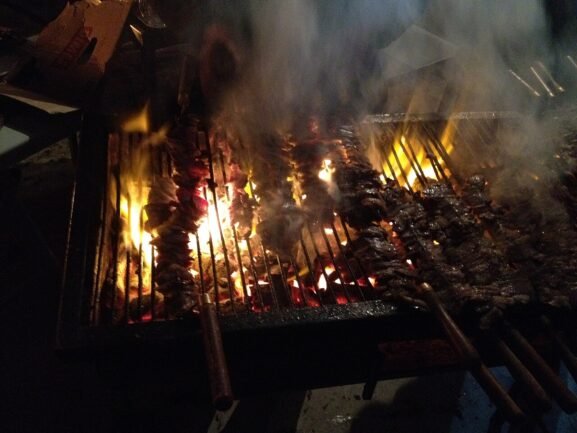
- Izgara (grilled): whole fish or fillets over charcoal with lemon. Best for levrek, çipura and lüfer.
- Tava (fried): small fish such as hamsi, dusted in cornmeal or flour.
- Buğulama: poached or steamed with lemon and parsley. Our levrek buğulama recipe shows how.
- Fırında (baked): whole fish in the oven, sometimes with vegetables.
- Çorba (soup): fish soup (balık çorbası) turns up on coastal menus.
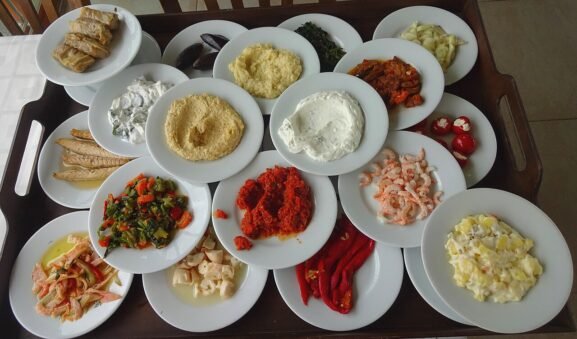
Cured fish appears as meze. Çiroz is salted, dried mackerel, warmed, shredded and dressed with olive oil, vinegar and dill. Lakerda is salted bonito, served in thick slices with red onion and olive oil, often with rakı. Other names you may meet: istavrit (horse mackerel), mezgit (whiting) and alabalık (trout).
Street seafood: balık ekmek and midye
Balık ekmek
“Fish bread”: a grilled fillet, usually mackerel, in half a loaf with lettuce, onion and tomato. It is the snack of Eminönü in Istanbul, sold from boats at the quay, and the usual drink beside it is a cup of turşu suyu (pickle juice) from the carts nearby; şalgam is the other option.
Midye dolma
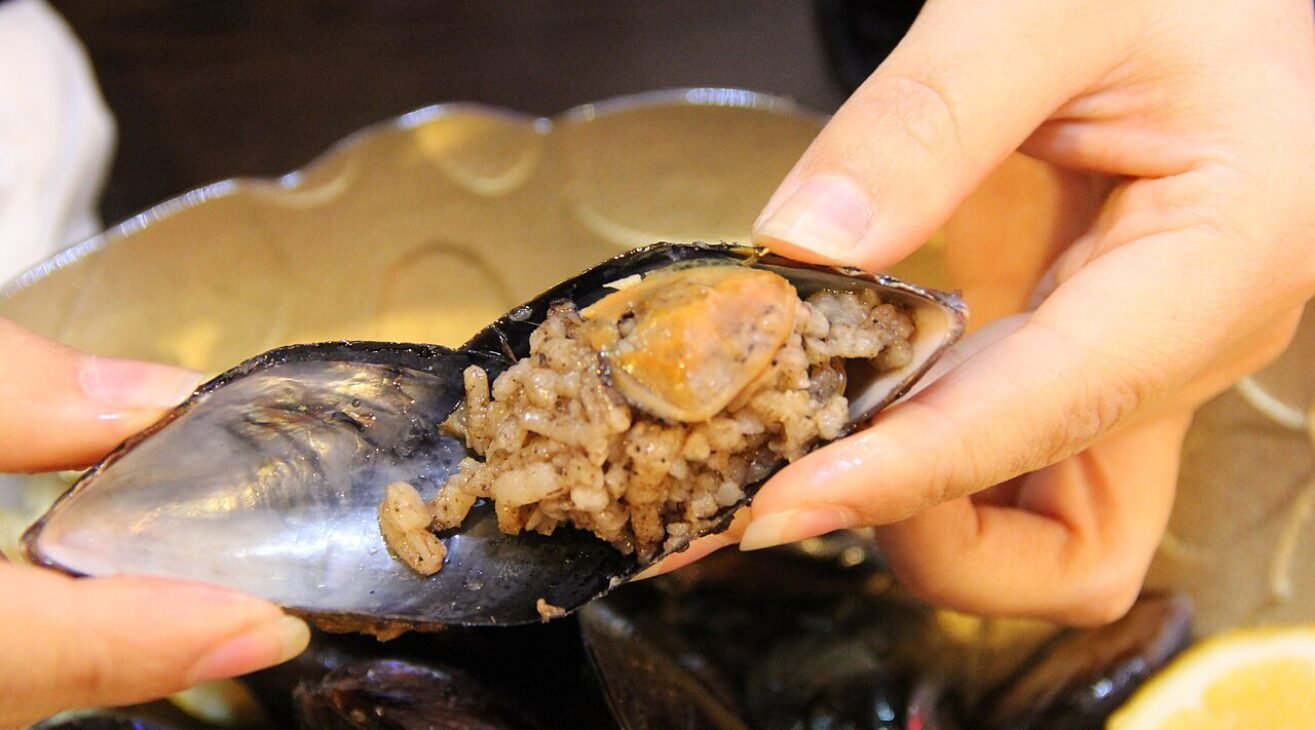
A mussel stuffed with spiced rice, often with currants and black pepper, eaten in one go after a squeeze of lemon. Street sellers in Istanbul, İzmir and Bodrum sell them by the piece. Shellfish needs careful handling, so buy from busy places where stock turns over fast. Our midye dolma recipe lets you make them at home.
Fried mussels and calamari
Midye tava (battered mussels) and kalamar tava (fried squid) are the standard hot seafood meze, served with tarator, a garlicky walnut and bread sauce.
What to expect in London
London Turkish fish menus are shorter than Istanbul ones, and most of the fish is farmed levrek and çipura, served whole and grilled with salad and lemon, usually priced per fish. Kalamar, midye tava and prawns are the usual hot starters. Hamsi does turn up in winter at a few places, though it is usually frozen; lüfer and palamut are rare.
When you order a whole fish, say ızgara (grilled) if that is what you want, and if you would rather not deal with the bones, ask the waiter whether they can fillet it for you at the table. Ask the price of anything sold by weight before it is cooked.
Two places do the Istanbul street classics. The Midyeci on Kingsland Road in Dalston started as London’s first midye dolma shop, sells the mussels by the kilo with plain or spicy rice, and also serves balık ekmek and fish kokoreç. Leydi does an Istanbul-style balık ekmek with mackerel wrapped in lavash.
How to order at a Turkish fish restaurant
- Look at the fish on display if there is one. The eyes should be bright, the gills red and wet, the flesh firm, and there should be no smell of ammonia.
- Ask whether it is wild or farmed. Neither is wrong; wild is leaner and pricier.
- A common order is cold meze first, then a hot starter such as calamari, then the fish.
- Drinks: rakı, an aniseed spirit distilled from grapes, is the traditional partner for fish. White wine or a soft drink works too.
- In a meyhane, sharing is normal. Tell the waiter if you want your fish simply grilled.
Where to eat Turkish fish in London
Start with our Turkish seafood restaurant list and the guide to Turkish seafood restaurants in London. For a long evening of meze and fish, browse the meyhane list too. At home, try the hamsi tava and levrek buğulama recipes.
Our pick: Sarıyer Balık, Newington Green
A family-run Turkish seafood restaurant and meyhane on Green Lanes, serving fish and rakı since 1990. The menu is mostly fish, with levrek, çupra, Karadeniz hamsi tava, kalamar izgara and midye tava, plus a large selection of cold meze. See Sarıyer Balık on Turkish Dish.
- The Midyeci – Turkish meyhane in Dalston & Stoke Newington
- Sarıyer Balık – Turkish meyhane in Newington Green
- Filika Restaurant Wanstead – Turkish meze & fine dining in Wanstead
- Midye & Kokoreç Garden – Turkish seafood in Edmonton
See all 4 Seafood (Balık) places in London
Turkish seafood FAQs
What is hamsi?
Hamsi is the European anchovy, caught in the Black Sea and eaten fresh from about October to February. It is usually fried whole in cornmeal, or layered with rice and cooked in the oven.
What is the difference between levrek and çipura?
Levrek is sea bass and çipura is gilt-head sea bream. Both are usually grilled or baked whole, and both are widely farmed in Turkey, which is why they are on menus all year.
Is midye dolma safe to eat?
It is a popular street snack, but shellfish needs careful handling, so choose a busy vendor with clearly fresh stock. Tell staff about any shellfish allergy.
What is balık ekmek?
A fish sandwich: grilled mackerel in bread with salad, best known from Eminönü in Istanbul. In London, The Midyeci and Leydi both serve it.
Photo: Fenerli1978, CC BY-SA 4.0, via Wikimedia Commons.