Hamsi tava recipe: crisp fried Black Sea anchovies
Hamsi tava is fresh anchovies, opened out and dusted in cornmeal, then fried in a hot pan until the coating is crisp and the little fish inside are sweet and tender. It is the signature dish of Turkey’s Black Sea coast, where hamsi (the European anchovy) is almost an obsession, and the Turkish Ministry of Culture and Tourism describes it as a well-known Black Sea dish now cooked all over the country.
Forget the salty tinned anchovies used in pizza and pasta. Fresh hamsi are mild, oily and delicate, more like a very small sardine. Cooked quickly and eaten straight from the pan with lemon and raw onion, they are one of the simplest and best fish dishes in Turkish cooking.
What is hamsi tava?
Hamsi are caught in the Black Sea and are at their best in the colder months. Wikipedia’s article on anchovies as food notes that in Turkey they are eaten from November to March, fried, grilled, steamed or cooked into a pilav. When the first catch comes in, fish markets and seafood restaurants all along the coast put hamsi tava on the menu.
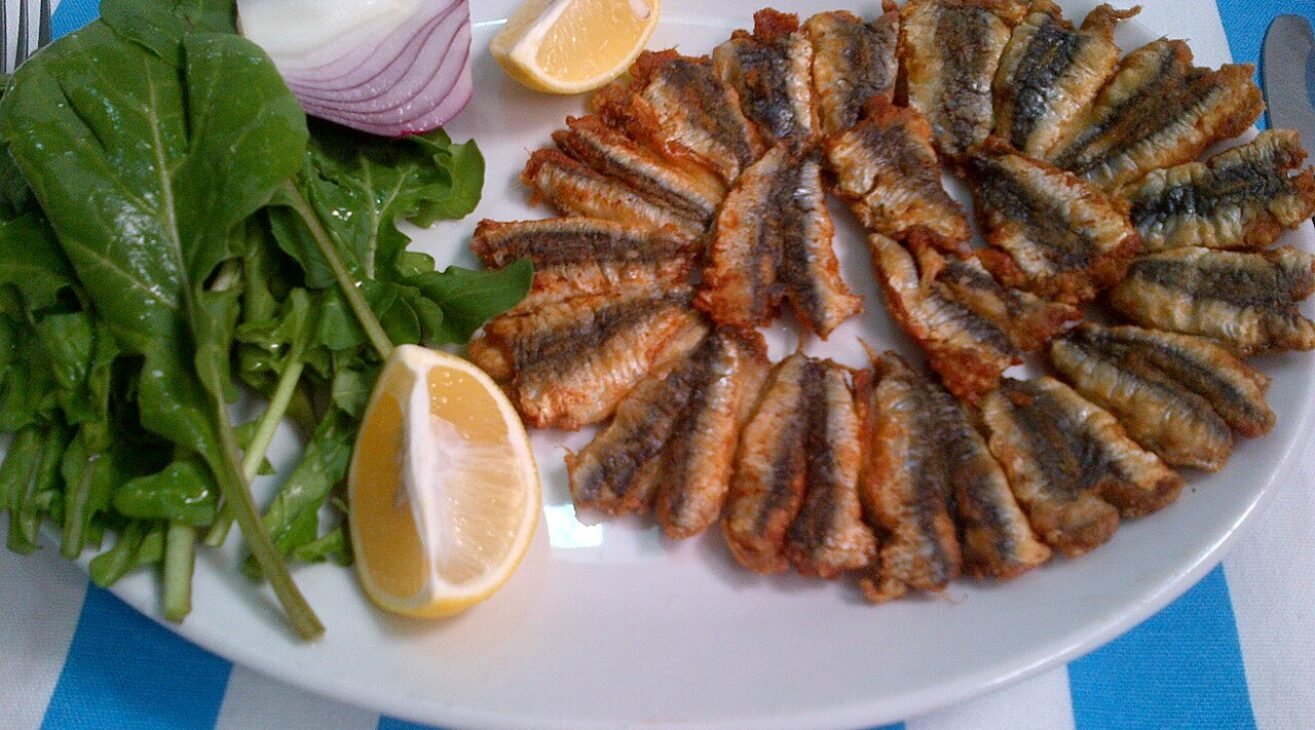
Tava means frying pan. In the classic presentation the cleaned fish are arranged in a tight circle, tails pointing into the middle, fried on one side, then flipped over in one piece with a plate, like a crisp fishy rosette. At home it is just as good fried in batches.
Other hamsi dishes
The Black Sea kitchen uses hamsi in everything: hamsili pilav (rice baked in a case of anchovies), hamsi buğulama (steamed with tomatoes and peppers), oven-baked versions and even hamsi cornbread. Hamsi tava is the one everyone starts with.
Ingredients
Serves 4 as a main course or 6 as a starter.
For the anchovies
- 1kg fresh whole anchovies (or sprats or very small sardines)
- 1 tsp fine salt
- 100g fine cornmeal (polenta flour or Turkish mısır unu)
- 30g plain flour
- Sunflower or corn oil, for shallow frying (about 200ml)
To serve
- 2 lemons, cut into wedges
- 1 red onion, thinly sliced and tossed with 1 tsp sumac
- A handful of rocket or flat-leaf parsley
- Cornbread or crusty bread
How to make hamsi tava
1. Clean the anchovies
Rinse the fish under cold water. Hold each anchovy, pinch off the head and pull it downwards so the guts come away with it. Run your thumb along the belly to open the fish flat, lift out the backbone and snap it off at the tail, leaving the tail on. It sounds fiddly but goes quickly after the first few.
2. Salt and drain
Rinse the cleaned fish again, then drain in a colander. Sprinkle with the salt, toss gently and leave for 15 minutes. Pat dry on kitchen paper so the coating sticks.
3. Coat in cornmeal
Mix the cornmeal and flour in a wide bowl. Toss the anchovies through it a handful at a time, shaking off any excess. Coat them just before frying, not in advance, or the coating turns soggy.
4. Fry until crisp
Heat about 5mm of oil in a large frying pan over a medium-high heat until a pinch of cornmeal sizzles straight away. Lay the fish in a single layer, opened side down, and fry for 2–3 minutes until golden underneath. Turn and fry for 1–2 minutes more.
5. Drain and serve
Lift onto kitchen paper and keep warm in a low oven, 100°C (80°C fan), while you fry the rest, adding fresh oil as needed. Serve immediately with lemon wedges, the sumac onions, rocket and bread.
Watch: how to make hamsi tava
This video shows how to clean the anchovies and fry them until crisp.
Tips for the best hamsi tava
- Buy the freshest fish you can: bright eyes, shiny skin and a clean sea smell. In London, fishmongers and some Turkish grocers stock fresh anchovies in season.
- Make sure the fish are dry before coating; wet fish make a pasty crust and spit in the oil.
- Do not overcrowd the pan. Frying in batches keeps the oil hot and the fish crisp.
- If you cannot find fresh anchovies, sprats work well with the same method, though they are a little oilier.
- For an oven version, lay the coated fish on an oiled tray, drizzle with oil and bake at 220°C (200°C fan) for 12–15 minutes.
What to serve with hamsi tava
On the Black Sea, hamsi tava comes with cornbread, raw onion and lemon, and that is hard to beat. Add a sharp çoban salatası or a spoonful of acılı ezme on the side. For a bigger fish supper, serve it before levrek buğulama (steamed sea bass), and if you want to stay on the Black Sea theme, bake some Karadeniz pide.
Where to eat hamsi tava in London
Fresh hamsi are seasonal, so not every London restaurant has them, but Turkish seafood places often put them on the menu in winter. Have a look at our Turkish seafood restaurant listings and our guide to Turkish seafood restaurants in London.
- Midye & Kokoreç Garden – Turkish seafood in Edmonton
- The Midyeci – Turkish meyhane in Dalston & Stoke Newington
- Sarıyer Balık – Turkish meyhane in Newington Green
- Filika Restaurant Wanstead – Turkish meze & fine dining in Wanstead
See all 4 Seafood (Balık) places in London
Hamsi tava FAQs
Do you eat hamsi bones?
The fine side bones are soft and edible once fried. Most people remove the backbone before cooking, as in this recipe, but very small fish can be fried whole.
Can I use frozen anchovies?
Yes. Thaw them slowly in the fridge, drain well and pat completely dry before coating. They are a little softer than fresh but still very good.
What flour is used for hamsi tava?
Traditionally fine cornmeal (mısır unu), sometimes mixed with a little wheat flour for a lighter crust. Coarse polenta is too gritty, so look for fine polenta flour.
When is hamsi season?
In Turkey, hamsi is eaten through the colder months, roughly November to March, when the fish are at their fattest and most flavourful.
Photo: E4024, CC BY-SA 4.0, via Wikimedia Commons.