Babagannuş recipe: smoky aubergine meze with tahini
Babagannuş is a smoky aubergine meze. The aubergines are charred until the skins turn black and collapse, and the soft, sweet flesh is scooped out and mixed with tahini, garlic, lemon and olive oil. It is quicker than it sounds and much better than most shop-bought versions, because the real smoke flavour only comes from properly burnt skins, and it needs little more than patience.
Turkey shares the dish with the Levant, where it is baba ganoush, and it is most at home in the south, in Hatay and Gaziantep. There you will also meet a chopped version with tomato, green pepper and pomegranate molasses that goes by the same name. This recipe is the creamy one with tahini, the version you are most likely to be served in London.
What is babagannuş?
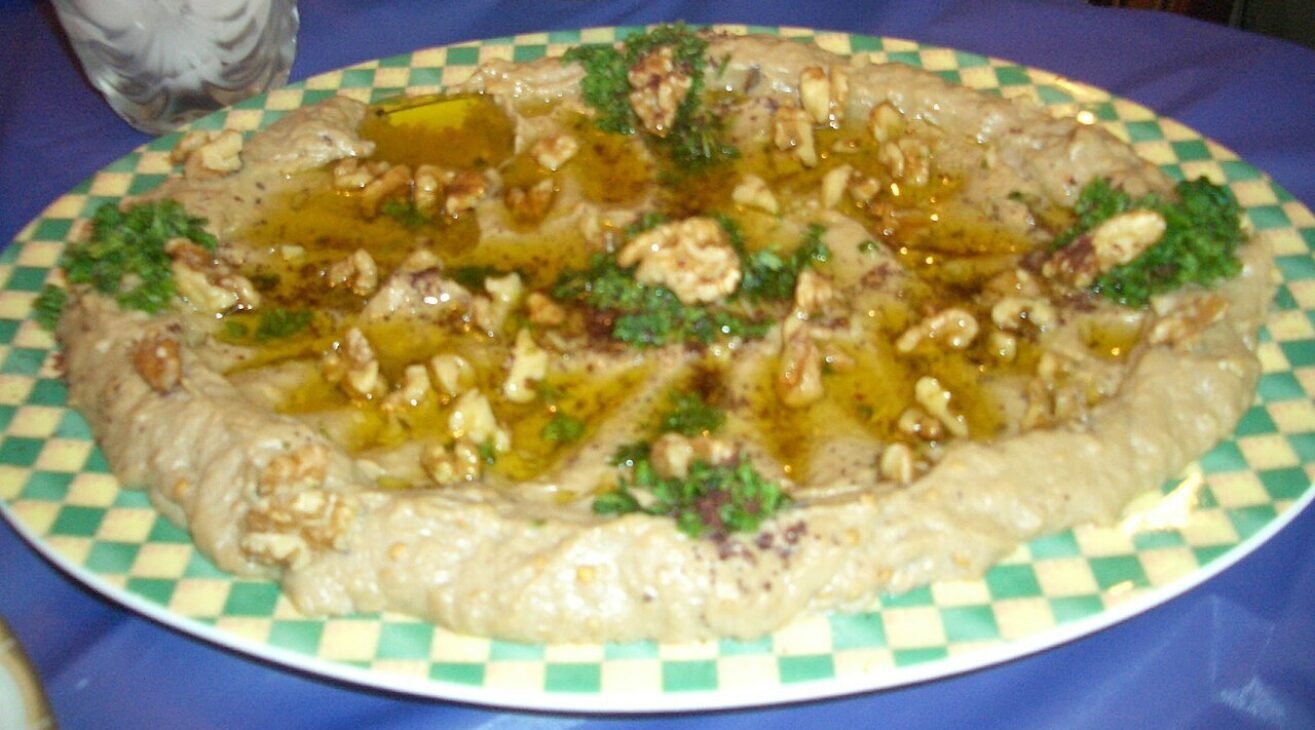
Babagannuş is a dip or meze made from chargrilled aubergine. The cooked flesh is mashed, not blended smooth, so there is some texture, and seasoned with garlic, lemon juice, salt and tahini. Many Turkish cooks also add a spoonful of yoghurt, which makes it milder and creamier. It is served at room temperature, drizzled with olive oil, and scooped up with bread. The smoky flavour comes from the burnt skin, which is why the aubergines are cooked until they look ruined.
Babagannuş or patlıcan salatası?
On this site the line is simple: babagannuş has tahini, patlıcan salatası does not. Our patlıcan salatası recipe is the lighter, sharper one, with plenty of garlic, lemon and olive oil. This page is the richer, nuttier tahini version. Both start with the same charred aubergine, so if you are making one you can easily make the other.
Popular variations
Common additions include a handful of chopped walnuts, a spoonful of pomegranate molasses, finely chopped green pepper or spring onion, and a pinch of cumin. Some cooks stir through a little smoked roasted red pepper. Whichever extras you choose, keep the aubergine flavour in front, and add extras a little at a time so they do not take over.
Ingredients
Serves 4 to 6 as a meze, with bread. Prep time: 15 minutes. Cooking time: 40 minutes.
For the aubergine
- 3 large aubergines (about 900g)
For the dressing
- 2 tbsp tahini
- 2 tbsp thick plain yoghurt
- 2 tbsp lemon juice
- 1 small garlic clove, crushed
- 3 tbsp extra virgin olive oil, plus extra to serve
- 1/2 tsp fine sea salt, plus more to taste
To finish
- Small handful flat-leaf parsley, chopped
- 2 tbsp pomegranate seeds (optional)
- Pinch of pul biber (optional)
How to make babagannuş
1. Char the aubergines
Prick each aubergine a few times with a fork. Place them directly on a gas hob flame on medium-high, turning with tongs every 3 to 4 minutes, for 12 to 15 minutes in total, until the skin is black and the flesh collapses. If you have no gas hob, use the method in the next step.
2. Or roast in the oven
Alternatively, heat the oven to 220°C (200°C fan). Roast the pricked aubergines on a lined tray for 40 to 45 minutes, turning once, until they are blistered and collapsed. Finish them for 3 minutes under a hot grill if you want a smokier taste. Leave until cool enough to handle before moving on to draining.
3. Drain the flesh
Rest the aubergines in a covered bowl for 10 minutes. Split each one open, scoop out the soft flesh with a spoon and discard the skins. Put the flesh in a colander over a bowl for 10 minutes to drain. It should look dark and glossy, with a strong smoky smell.
4. Mash the flesh
Chop the drained flesh roughly with a knife, then mash it with a fork in a bowl. Keep some texture. Do not use a food processor, as it turns the flesh gluey and watery. Remove any scraps of burnt skin.
5. Add the dressing
Stir the tahini, yoghurt, lemon juice, garlic and salt into the aubergine. Add the olive oil slowly while stirring until the mixture is creamy. Taste and adjust the lemon and salt. It should be smoky, a little tangy, and not bitter.
6. Rest and serve
Leave for 15 minutes so the flavours settle. Spread on a plate, make a dip in the middle and fill it with more olive oil. Scatter over the parsley, pomegranate seeds and pul biber if using. Serve at room temperature with warm bread.
Watch: how to make babagannuş
A Turkish recipe site’s video of the dish, useful for seeing how the finished babagannuş is mashed and plated.
Tips for the best babagannuş
- Do not be afraid of black skin. The burnt skin gives the smoke, and the flesh inside stays soft and sweet.
- Drain the flesh well. Excess liquid dilutes the flavour and makes the dip runny.
- Mash by hand with a fork. A blender produces a smooth paste but loses the character.
- Taste before adding more garlic. Raw garlic grows stronger as it sits.
- Choose heavy aubergines with shiny, tight skins. Older ones with soft patches taste bitter.
On the table with babagannuş
Serve babagannuş with warm pide or sliced sourdough, alongside other meze such as haydari, ezme, fava and olives. It also goes well with grilled lamb or chicken as a smoky side. A few cherry tomatoes or cucumber slices on the table add freshness.
How to store babagannuş
Keep it in a covered container in the fridge for up to 3 days. Stir before serving and let it come to room temperature for 20 minutes. Add a squeeze of lemon and a little oil to refresh it. Freezing is not recommended, as the texture goes watery.
Where to eat babagannuş in London
Babagannuş sits on the cold meze list at most London Turkish restaurants, usually as a single plate with bread or as part of a mixed meze platter. Lokkanta near Queensway has it among its cold meze, Baba in Chelsea serves it with crispy onions and za’atar bread, and ET House in Swiss Cottage lists it ahead of the grill. For more places, browse our meyhane listings or our round-up of the best Turkish restaurants in London.
- Akşam Güneşi Meze Bar – Turkish meyhane in Edmonton
- Sarıyer Balık – Turkish meyhane in Newington Green
- The Midyeci – Turkish meyhane in Dalston & Stoke Newington
- Meyhane Tottenham – Turkish meyhane in Tottenham
See all 4 Meyhane (Rakı & Meze) places in London
Babagannuş FAQs
Can I make babagannuş without a gas hob?
Yes. Roast the pricked aubergines in a hot oven at 220°C (200°C fan) for 40 to 45 minutes, then finish under the grill, or char them on a barbecue. A drop of smoked paprika can add a hint of smoke if you are short on time, though it will not match real charring.
What is the difference between babagannuş and baba ganoush?
Very little. Babagannuş is the Turkish spelling of baba ganoush, and the tahini version here is close to what you find in Lebanese restaurants. Turkish cooks tend to mash it by hand rather than blend it, so it keeps more texture.
Can I make it ahead?
Yes, babagannuş keeps well. Make it up to 2 days in advance, cover and chill. Leave out the parsley and pomegranate until serving, and take it out of the fridge 20 minutes before eating so the olive oil loosens and the flavour comes through.
Why does my babagannuş taste bitter?
Bitterness usually comes from old aubergines, burnt flesh rather than just burnt skin, or too much tahini. Scoop the flesh carefully away from the skin, use fresh aubergines, and add lemon and a little yoghurt to balance. A pinch of sugar can also take the edge off.
More Turkish recipes
- Patlıcan salatası recipe: smoky Turkish aubergine salad
- Haydari recipe: thick Turkish yoghurt dip with garlic and herbs
- Acılı ezme recipe: spicy Turkish tomato and pepper salad
Photo: Basel15 at English Wikipedia, Public domain, via Wikimedia Commons.