Humus recipe: Turkish warm hummus with butter and pastırma
Humus is the Turkish spelling of hummus, and the Turkish way of serving it is often warm, spread thick on a plate and finished with sizzling butter and chilli. It is the same smooth chickpea and tahini base you know, but a hot topping turns it from a cold dip into something closer to a small hot dish. A few crisp slices of pastırma, the spiced air-dried beef, make it more of a meal.
Every country around the eastern Mediterranean has its own hummus. The Turkish signature is the hot finish: butter sizzled with chilli and poured over just before it reaches the table, often with pastırma. You will find it on meze spreads in Antep and Adana and in Istanbul meyhanes, and it makes a good starter on a cold evening.
What is humus?
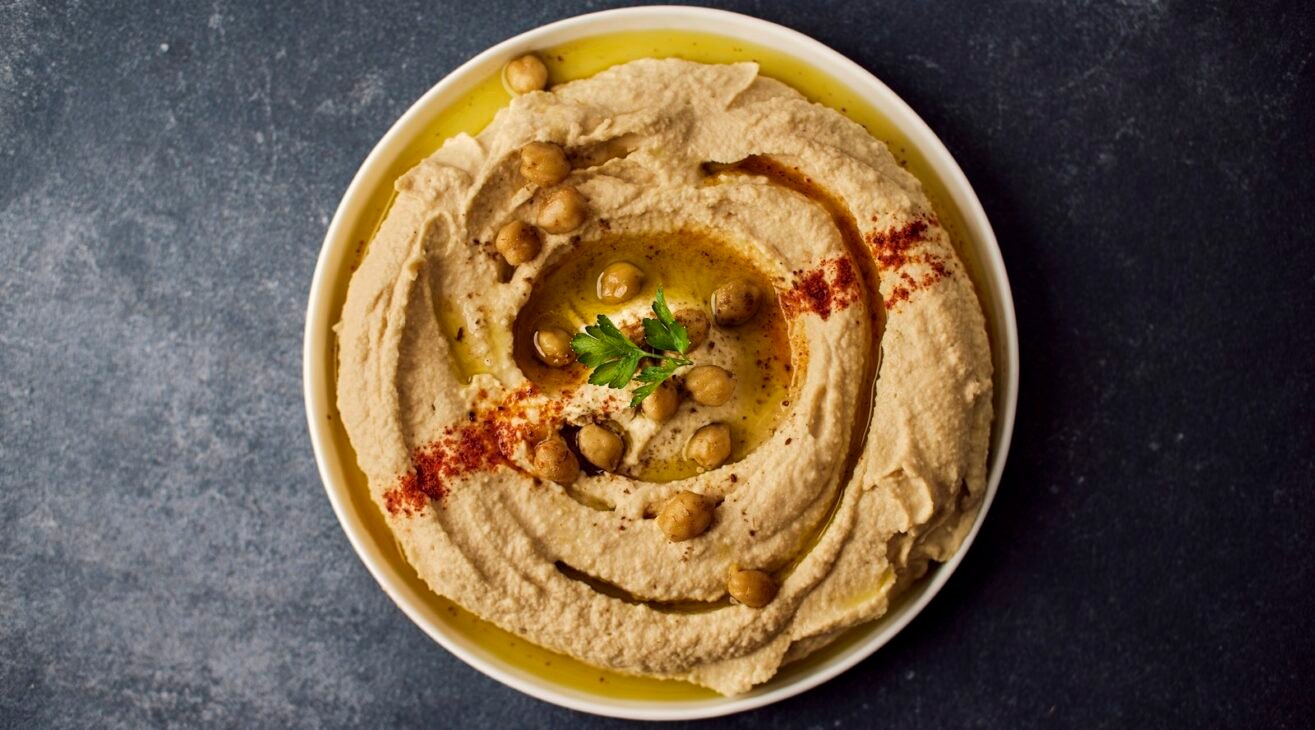
Humus is a purée of cooked chickpeas, tahini, lemon juice, garlic and salt, blended until very smooth and loosened with a little iced water. In a Turkish meze setting it is eaten with warm bread, flat pide or raw vegetables, and often served on a plate with a hollow in the middle for the topping. The taste is nutty, lemony and lightly garlicky, and the texture should be creamy enough to spread without being stiff. The quality of the tahini matters more than anything else in the bowl.
Popular variations
The best known Turkish topping is melted butter with pul biber (Turkish chilli flakes), sometimes with a spoonful of paprika. Pastırma, fried until crisp, is the classic extra, and some cooks add chopped walnuts or toasted pine nuts. A cooler option leaves out the butter and uses olive oil and sumac. In south-east Turkey you also see humus kavurma, topped with small pieces of lamb fried in their own fat. Beetroot and roasted red pepper versions are newer, and good in their own right.
Ingredients
Serves 4 to 6 as a meze, with bread. Prep time: 15 minutes. Cooking time: 15 minutes.
For the humus
- 2 x 400g tins chickpeas, drained and rinsed (about 480g drained)
- 1/4 tsp bicarbonate of soda
- 100g good-quality tahini
- 60ml lemon juice (about 2 lemons)
- 1 small garlic clove, crushed
- 1 tsp fine sea salt
- 1/2 tsp ground cumin
- 60 to 90ml iced water
For the topping
- 50g unsalted butter
- 1 tsp pul biber, or 1/2 tsp for milder
- 1/2 tsp sweet paprika
- 100g pastırma, thinly sliced and cut into strips (optional)
- Chopped flat-leaf parsley, to finish
To serve
- Warm pide or flatbread
- Sliced cucumber and radishes
How to make humus
1. Soften the chickpeas
Put the chickpeas in a saucepan with the bicarbonate of soda and enough water to cover by 3cm. Simmer for 10 to 12 minutes, until very soft and mashable between your fingers. Skim off any loose skins. Drain, keeping 4 tablespoons of the water. Leave the chickpeas warm.
2. Whip the tahini
In a food processor, blend the tahini, lemon juice, garlic, salt and cumin for 1 minute. The mixture will seize and turn thick. Add 3 tablespoons of iced water and blend again for another minute until it is pale, light and creamy, like whipped butter.
3. Blend in the chickpeas
Add the warm chickpeas and blend for 3 to 4 minutes, scraping down the sides. With the motor running, add the rest of the iced water a spoonful at a time until the humus is soft, glossy and spreadable. Use a little of the reserved cooking water if it still feels stiff. Taste for salt and lemon.
4. Crisp the pastırma
If using pastırma, fry it in a dry pan over a medium heat for 2 to 3 minutes, turning, until the edges crisp and the fat runs. Lift it out onto kitchen paper. Leave the rendered fat in the pan to melt the butter in, or wipe the pan clean if you prefer a cleaner butter.
5. Make the chilli butter
Melt the butter in the same pan over a medium-low heat until it foams. Take it off the heat, stir in the pul biber and paprika and let them sizzle for 20 seconds. The butter should turn a deep red-orange and smell toasty. Do not let it burn.
6. Spread and top
Spread the warm humus on a wide plate and make a shallow well in the middle with the back of a spoon. Pour the chilli butter into the well and over the edges. Scatter over the pastırma and parsley. Serve right away with warm bread.
Watch: how to make humus
Refika’s Kitchen shows how to get a very smooth humus, useful for judging the texture before you add the topping.
Getting it smooth, and other tips
- Smoothness comes from three things: chickpeas cooked until they fall apart (the bicarbonate helps the skins slip off), tahini whipped pale with lemon and iced water before anything else goes in, and a full 3 to 4 minutes in the processor while the chickpeas are still warm. A high-speed blender gives the silkiest finish. Peeling the chickpeas by hand helps, but you can skip it.
- Buy a runny, pale tahini. If yours is thick or bitter, the humus will taste dull no matter what else you do.
- Serve straight away if you want a warm humus. Reheat gently in a microwave if it cools, stirring in a spoon of water.
- Pastırma is sold sliced, usually in vacuum packs, at Turkish grocers and delis; Green Lanes and Stoke Newington have plenty. Browse our Turkish grocers and delis. If you cannot get it, bresaola crisped in the pan or slices of sucuk fried until the edges catch are good stand-ins, or simply leave it out: the chilli butter alone is enough.
Serving humus as part of a meze spread
Serve warm humus with pide, lavaş or any soft flatbread, plus sliced cucumber, radishes and a few olives. It sits well on a meze table beside ezme, haydari and cacık. A small bowl of pickled chillies is a good sharp contrast to the rich butter.
How to store humus
Cool leftover plain humus, without the butter or pastırma, and refrigerate it within 2 hours in a covered container for up to 4 days. Warm it gently with a spoonful of water, then add freshly made topping. Plain humus can be frozen for up to 2 months.
Where to eat humus in London
Most London Turkish restaurants serve humus cold as a meze, with olive oil and paprika. For the warm version, look for it listed as a hot meze. Leydi does a baked claypot humus with pastırma brown butter, and Veyso’s in Romford and Helvadere both serve humus kavurma, topped with sautéed lamb. For more places, browse our meyhane listings or our round-up of the best Turkish restaurants in London.
- Akşam Güneşi Meze Bar – Turkish meyhane in Edmonton
- The Midyeci – Turkish meyhane in Dalston & Stoke Newington
- Meyhane Tottenham – Turkish meyhane in Tottenham
- Sarıyer Balık – Turkish meyhane in Newington Green
See all 4 Meyhane (Rakı & Meze) places in London
Humus FAQs
Can I use dried chickpeas for humus?
Yes, and the flavour is slightly better. Soak 250g overnight with 1/2 tsp bicarbonate, then simmer in fresh water for 45 to 60 minutes until they collapse when pressed. Use the same method from there, with the cooking water for loosening.
Is humus the same as hummus?
Yes. Humus is the Turkish spelling and the dish is essentially the same chickpea and tahini purée. In Turkey it is often served warm with a butter topping, while in the UK it is usually cold and finished with olive oil.
Can I make humus without tahini?
You can blend chickpeas with olive oil, lemon and garlic, but it will be a different dish, closer to a chickpea purée, and less creamy. Tahini is what makes humus nutty and smooth, so it is worth buying a jar.
What is pastırma?
Pastırma is Turkish air-dried cured beef coated in a paste of fenugreek (çemen), garlic and chilli. It is sold thinly sliced and cooks in a pan in a few minutes. It is strongly flavoured, so a little goes a long way. English pastrami takes its name from the same root, but tastes quite different.
More Turkish recipes
- Patlıcan salatası recipe: smoky Turkish aubergine salad
- Acılı ezme recipe: spicy Turkish tomato and pepper salad
- Nohut yemeği recipe: Turkish chickpea stew with lamb
Photo: Ludovic Avice, Unsplash License, via Unsplash.