Kazandibi recipe: Turkish caramelised milk pudding
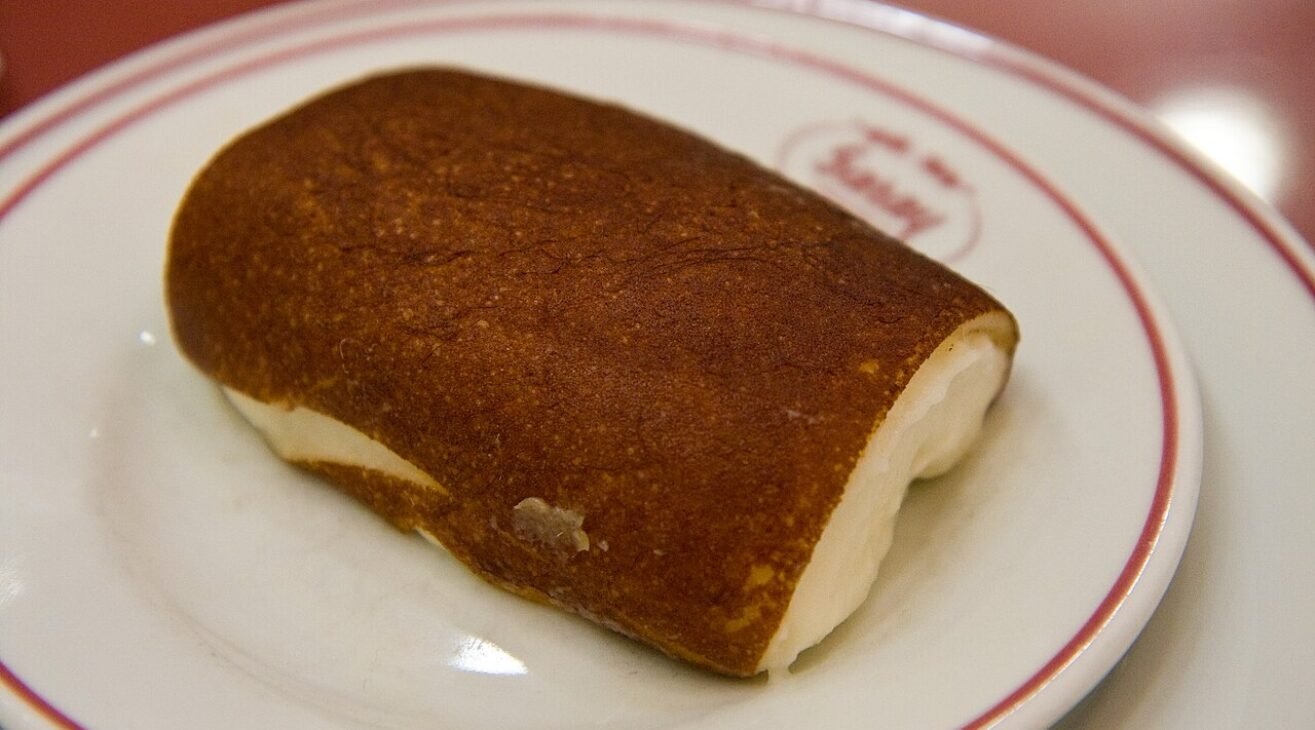
Kazandibi means “bottom of the cauldron”, and that is exactly what it is: the scorched, caramelised layer at the base of a pan of thick milk pudding. Turkish pudding shops turn that happy accident into the whole point of the dish. The pudding is cut into strips, rolled or folded so the bronzed side faces up, and dusted with cinnamon. You get a cool, wobbly, milky inside and a toasty, slightly bitter-sweet skin.
It is a dessert from the Ottoman palace kitchens, and still one of the most popular in Turkey today, according to the Wikipedia entry on kazandibi. The traditional pudding shop version is made with finely shredded chicken breast; this home recipe uses the simpler milk-and-starch base that many Turkish families make instead.
What is kazandibi?
Kazandibi is a set milk pudding with a deliberately burnt base. Kazan is a large cooking pot or cauldron and dip means bottom. GoTürkiye, the official Turkish tourism promotion agency, describes it as made by burning the bottom part of a dense pudding, which gives it a smoky aroma.
The tavuk göğsü version
In the classic muhallebici (pudding shop), kazandibi starts as tavuk göğsü, a milk pudding thickened with very finely shredded chicken breast. The chicken cannot be tasted; it simply gives the pudding a stretchy, chewy texture. The tray is then set over a flame until the bottom caramelises.
The home version
Most home cooks use muhallebi (a plain milk pudding thickened with rice flour and cornflour) instead. It is easier, needs no chicken and still caramelises beautifully. A little mastic, the resin from the mastic tree, adds a piney, resinous note that many people love. It is optional.
Ingredients
Serves 8. You need a metal baking tin, roughly 20 x 25cm, that can go directly on the hob. Do not use glass or ceramic.
For the burnt base
- 15g soft butter
- 3 tbsp caster sugar
For the pudding
- 1 litre whole milk
- 150g caster sugar
- 60g rice flour
- 40g cornflour
- 1/4 tsp mastic grains, crushed with 1 tsp sugar (optional)
- 1 tsp vanilla extract
- 15g butter
To serve
- Ground cinnamon
- Chopped pistachios (optional)
How to make kazandibi
1. Prepare the tin
Rub the base and sides of the metal tin generously with the soft butter. Sprinkle the 3 tbsp sugar evenly over the base, tilting the tin so it forms an even layer.
2. Mix the pudding base
In a large saucepan, whisk the rice flour, cornflour and sugar into the cold milk until there are no lumps. Starting cold is what keeps the pudding smooth.
3. Cook until thick
Set the pan over a medium heat and stir constantly with a whisk or wooden spoon, scraping the bottom. After 10 to 15 minutes it will thicken to the consistency of custard and bubble lazily. Cook for 2 more minutes, then stir in the crushed mastic, vanilla and butter.
4. Pour into the tin
Pour the hot pudding straight into the sugared tin and smooth the top.
5. Burn the bottom
Put the tin directly on a medium hob. Move it slowly every minute or so, so that every part of the base sits over the heat. After 8 to 12 minutes you will smell caramel and see the edges turn deep brown. Lift a corner with a spatula to check: you want a dark amber, not black.
6. Cool and chill
Let the tin cool on a rack, then refrigerate for at least 4 hours, ideally overnight, until completely set.
7. Cut and roll
Cut the pudding into rectangles about 5 x 8cm. Slide a thin spatula under each one and fold or roll it over so the caramelised underside is now on top. Dust with cinnamon and serve cold.
Watch: how to make kazandibi
See how the tin is moved over the flame and how the strips are rolled.
Tips for the best kazandibi
- A heavy, flat-bottomed metal tin gives the most even caramel. Thin tins scorch in patches.
- Keep the tin moving on the hob. A gas flame is easiest; on an electric ring, rotate the tin every 30 seconds.
- Take it a little further than you think. Pale caramel tastes of nothing; deep amber gives that bittersweet edge.
- Grind mastic with sugar in a mortar. On its own it sticks to everything.
- Chill properly. Warm kazandibi tears when you try to roll it.
What to serve with kazandibi
Kazandibi is usually eaten on its own, cold, with a small cup of Turkish coffee to cut the sweetness. For a pudding-shop spread, serve it next to a baked sütlaç (rice pudding) and a bowl of aşure, or follow a rich meal with a smaller piece alongside baklava.
Where to eat kazandibi in London
Look for kazandibi at Turkish dessert cafés and patisseries, which often keep it in the chiller next to sütlaç and tavuk göğsü. Browse our desserts and baklava listings, or read our London baklava guide for the shops that take sweets seriously.
- Gaziantep Pastanesi – Turkish bakery & börek in Edmonton
- Mersin Tantuni – Turkish desserts & baklava in Dalston & Stoke Newington
- Bebek Baklava – Turkish desserts & baklava in Dalston & Stoke Newington
- Mazlum London 1924 – Turkish desserts & baklava in Knightsbridge
- The Baklava Company – Turkish desserts & baklava in Whitechapel
- Cafer Erol London 1807 – Turkish desserts & baklava in Knightsbridge
See all 15 Desserts & Baklava places in London
Kazandibi FAQs
Does kazandibi contain chicken?
The traditional pudding-shop version does, because it is made from tavuk göğsü. Many shops and most home cooks use a chicken-free milk pudding, as in this recipe. Ask if you need to be sure.
Can I caramelise kazandibi in the oven?
The hob gives the best result, but you can caramelise the sugared tin under a hot grill first, then pour the pudding over. The flavour will be a little less smoky.
How long does kazandibi keep?
Covered in the fridge, it keeps for 3 days. The caramel softens slightly over time but still tastes good.
Photo: Garrett Ziegler, CC BY-SA 4.0, via Wikimedia Commons.