Patlıcan musakka recipe: Turkish aubergine and lamb musakka
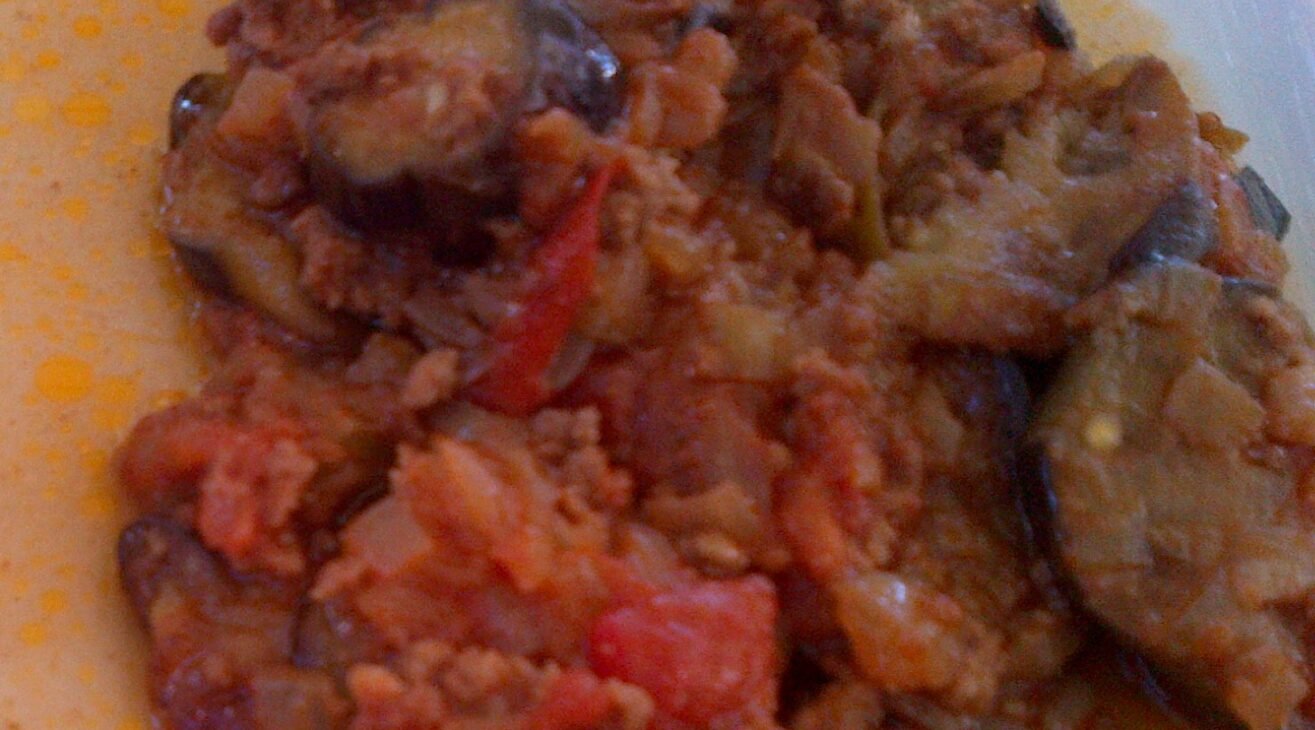
Patlıcan musakka (aubergine musakka) is one of the great dishes of Turkish home cooking: slices of aubergine fried until soft and golden, then baked with minced lamb, onion, green peppers and tomato until everything melts together. It shares a name with the Greek moussaka, but there is no béchamel and no tall layered bake. As Wikipedia’s moussaka article explains, the Turkish version is not layered at all, and it is eaten warm or at room temperature with pilav and cacık.
It is a summer favourite, made when aubergines are cheap and glossy, but you will find it on lokanta counters all year. The trick is in the aubergines: salting them, drying them and frying them properly, so they turn creamy and sweet rather than oily and bitter.
What is patlıcan musakka?
Musakka is a family dish rather than a restaurant showpiece, and a regular on the trays of the esnaf lokantası, the modest restaurant serving home-made traditional dishes described in the Wikipedia overview of Turkish cuisine. Most Turkish cooks arrange the fried aubergine in a tray or wide pan, spoon a spiced mince sauce over or between it, top with tomato and pepper and bake or simmer until the juices thicken. It is close to patlıcan oturtma, where the mince is “seated” on top of the aubergine, and many families use the names almost interchangeably.
Other versions
The same method works with other vegetables. Kabak musakka uses courgettes, patates musakka uses sliced potatoes, and there is even a carrot version. Some cooks grill or oven-roast the aubergines rather than frying them to make the dish lighter, which is what we suggest as an option below.
Ingredients
Serves 4.
For the aubergines
- 3 medium aubergines (about 900g)
- 2 tsp fine salt, for salting
- Sunflower oil, for frying (about 150ml), or 4 tbsp olive oil for oven roasting
For the meat sauce
- 2 tbsp olive oil
- 400g minced lamb or beef (about 15–20% fat)
- 1 large onion (about 200g), finely chopped
- 2 Turkish green peppers (or 1 green bell pepper), chopped
- 2 garlic cloves, chopped
- 1 tbsp tomato paste
- 1 tbsp Turkish red pepper paste (biber salçası)
- 2 ripe tomatoes, grated (skins discarded)
- 1 tsp salt
- ½ tsp black pepper
- 1 tsp pul biber (Turkish chilli flakes)
- ½ tsp ground cumin
For the top
- 2 tomatoes, sliced into rounds
- 2 green peppers, halved lengthways
- 1 tbsp tomato paste mixed with 250ml hot water
How to make patlıcan musakka
1. Prepare the aubergines
Peel the aubergines in stripes, leaving bands of skin, and cut into 1.5cm rounds or thick lengthways slices. Sprinkle with salt, leave in a colander for 30 minutes, then rinse and squeeze or pat completely dry with a clean tea towel.
2. Fry or roast the aubergines
Heat about 1cm of sunflower oil in a frying pan and fry the slices in batches for 2–3 minutes a side until golden and soft. Drain on kitchen paper. For a lighter version, brush with olive oil and roast on lined trays at 220°C (200°C fan) for 20–25 minutes, turning once.
3. Make the meat sauce
Heat the olive oil in a pan and cook the onion and green peppers over a medium heat for 8 minutes until soft. Add the mince and cook, breaking it up, until it loses its pink colour and any liquid has evaporated. Stir in the garlic, tomato paste and pepper paste for 2 minutes, then add the grated tomato, salt, pepper, pul biber and cumin. Simmer for 10 minutes until thick.
4. Assemble
Heat the oven to 190°C (170°C fan). Arrange the aubergine slices snugly in a baking dish about 30 x 20cm, overlapping them slightly, then spoon the meat sauce evenly over the top. Finish with the tomato slices and halved peppers, and pour the tomato paste water around the edges.
5. Bake
Cover loosely with foil and bake for 25 minutes, then uncover and bake for another 15–20 minutes until the tomatoes are soft and the sauce is bubbling and reduced.
6. Rest and serve
Leave the musakka to rest for at least 15 minutes before serving. It tastes even better warm rather than piping hot, and it is excellent the next day.
Watch: how to make patlıcan musakka
This video shows how the aubergines are prepared and the musakka is put together.
Tips for the best patlıcan musakka
- Do not skip salting and drying the aubergines: wet aubergines spit in the pan and soak up much more oil.
- Fry in hot oil and in small batches. If the oil is not hot enough the aubergine turns greasy.
- Choose firm, glossy aubergines with green stems; they have fewer seeds and less bitterness.
- Mince with some fat gives a juicier sauce. Very lean mince can make the dish dry.
- If you have time, make it a few hours ahead. Like most Turkish home dishes, it improves as it sits.
What to serve with patlıcan musakka
Musakka is traditionally eaten with buttery rice pilav and a bowl of cacık (garlicky yoghurt with cucumber). Add a fresh çoban salatası and some crusty bread. If you love aubergine, try it alongside our imam bayıldı or the stuffed aubergine karnıyarık, which uses a very similar filling.
Where to eat patlıcan musakka in London
Musakka is a staple of the daily trays at Turkish home-cooking cafés and lokanta-style restaurants around London. Browse our home cooking and lokanta listings or our guide to the best Turkish restaurants in London.
- OTE – Turkish home cooking in Soho & West End
- Antep Taş Fırın Harringay – Turkish home cooking in Harringay & Green Lanes
- 27 Lahmacun – Turkish gözleme & mantı in Tottenham
- Üstün Lahmacun & Pide Salonu – Turkish home cooking in Newington Green
- Sofra Mayfair – Turkish home cooking in Soho & West End
- Esnaf Lokantası – Turkish home cooking in Enfield
See all 15 Home Cooking (Lokanta) places in London
Patlıcan musakka FAQs
What is the difference between Turkish and Greek moussaka?
Greek moussaka is a layered bake topped with a thick béchamel. Turkish musakka has no béchamel: fried aubergine is cooked with a spiced mince and tomato sauce and served with rice and yoghurt.
Can I make musakka without frying?
Yes. Brush the aubergine slices with olive oil and roast them at 220°C (200°C fan) for 20–25 minutes. The texture is a little firmer, but it is much lighter.
Can I make a vegetarian musakka?
Replace the mince with 400g cooked green lentils or diced mushrooms and a little extra olive oil. Keep the peppers, pastes and spices the same.
Does musakka freeze well?
It freezes reasonably well for up to 2 months, although the aubergine softens further. Thaw overnight in the fridge and reheat in a covered dish at 180°C (160°C fan).
Photo: E4024, CC BY-SA 4.0, via Wikimedia Commons.