Kuru fasulye recipe: Turkish white bean stew with lamb
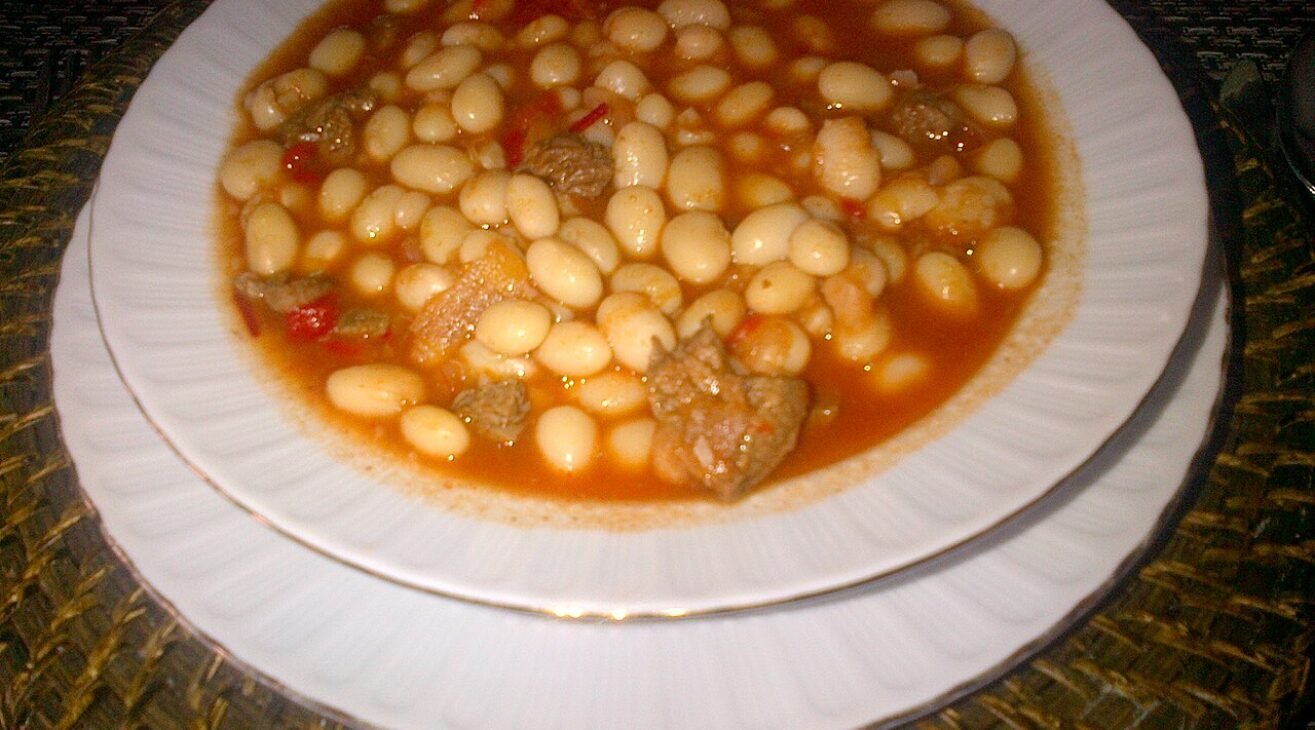
Kuru fasulye (literally “dried beans”) is white beans stewed slowly in a tomato and pepper sauce, usually with a little lamb or beef, until the beans are soft enough to crush on your tongue and the liquid has turned silky. It is cheap, filling and deeply comforting, and it is so loved across the country that it is often considered the national dish of Turkey, as the Wikipedia entry on kuru fasulye notes.
What makes a good one is patience rather than technique. Soak the beans properly, cook them gently so they keep their shape, and finish with butter and a pinch of chilli. Spoon it over buttery rice with a sharp salad and a glass of ayran, and you have the lunch that Turkish workers have queued for at their local lokanta (a canteen-style restaurant) for generations.
What is kuru fasulye?
Kuru fasulye is one of the sulu yemekler, the “dishes with juice” that sit in steaming trays at the front of every esnaf lokantası (tradesmen’s restaurant). The beans are usually medium white haricot or the larger, creamier dermason variety, cooked with onion, tomato paste and often biber salçası (red pepper paste).
The Turkish Ministry of Culture and Tourism describes it as a dish cooked all over the country, especially in winter, and traditionally served with bulgur pilaf and a vegetable salad. Rice is just as common, and in Istanbul the pairing of beans and rice pilav is almost a single dish.
Regional versions
Some cooks use lamb or beef on the bone, others use small cubes of shoulder. Some add pastırma (air-dried cured beef) or sucuk (spiced sausage) instead of fresh meat, and meat-free versions cooked with plenty of olive oil are common at home.
Ingredients
Serves 4–6. You need to soak the beans overnight, so start the day before.
For the beans
- 400g dried white beans (haricot, cannellini or large dermason)
- Cold water, for soaking and par-boiling
For the stew
- 3 tbsp olive oil
- 20g butter, plus 20g to finish
- 300g boneless lamb or beef shoulder, cut into 2cm cubes
- 1 large onion (about 200g), finely chopped
- 2 garlic cloves, finely chopped
- 1 tbsp Turkish red pepper paste (biber salçası), mild or hot
- 1 tbsp tomato paste
- 1 large ripe tomato, grated (skin discarded)
- 1.2 litres hot water or light chicken stock
- 1–1½ tsp salt, to taste
- ½ tsp black pepper
- 1 tsp pul biber (Turkish chilli flakes)
How to make kuru fasulye
1. Soak the beans
Put the beans in a large bowl, cover with at least three times their volume of cold water and leave for 10–12 hours or overnight. They should roughly double in size.
2. Par-boil and drain
Drain the beans, put them in a pan with fresh cold water and bring to the boil. Simmer for 10 minutes, skimming off the foam, then drain and rinse. This makes the finished stew lighter and easier to digest.
3. Brown the meat
Heat the olive oil and 20g butter in a heavy casserole over a medium-high heat. Add the meat in one layer and leave it alone for a few minutes so it browns well, then turn and brown the other sides, about 8 minutes in total.
4. Build the sauce
Turn the heat to medium, add the onion and cook for 8–10 minutes until soft and golden. Stir in the garlic for a minute, then the pepper paste and tomato paste. Fry the pastes for 2 minutes until they darken and smell sweet, then add the grated tomato and cook for 2 minutes more.
5. Simmer the beans
Add the drained beans, the hot water or stock and the black pepper. Bring to the boil, then lower the heat, cover with the lid slightly ajar and simmer very gently for 1 hour–1 hour 30 minutes, until the beans are completely tender and the liquid has thickened. Add the salt only for the last 20 minutes, and top up with a splash of hot water if it gets too thick.
6. Finish and rest
Melt the remaining 20g butter in a small pan, add the pul biber and let it sizzle for a few seconds. Pour it over the stew, turn off the heat and leave it to rest, covered, for 15–20 minutes before serving. It is even better the next day.
Watch: how to make kuru fasulye
Prefer to see it done? This video shows the whole process, from soaking to the finished stew.
Tips for the best kuru fasulye
- Use beans from a recent harvest if you can find them in a Turkish grocer: old beans can stay hard however long you cook them.
- Salt late. Adding it at the start can toughen the skins, so wait until the beans are nearly soft.
- Keep the simmer lazy, with just a few bubbles. A hard boil splits the beans and turns the stew mushy.
- Frying the pepper and tomato pastes in fat before adding liquid gives a deeper, sweeter sauce.
- For a vegetarian version, skip the meat, use 5 tbsp olive oil and add a diced carrot and green pepper with the onion.
- A pressure cooker cuts the simmering to about 25–30 minutes once at pressure; rest it well afterwards.
What to serve with kuru fasulye
The classic plate is kuru fasulye spooned next to buttery rice pilav, with pickles (turşu) and raw onion on the side. A crunchy çoban salatası (shepherd’s salad) cuts through the richness, and a cold ayran is the traditional drink. If you are cooking a lokanta-style spread, add a pot of nohut yemeği (chickpea stew) and finish with sütlaç (rice pudding).
Where to eat kuru fasulye in London
Many of London’s Turkish home-cooking cafés serve kuru fasulye as a daily tray dish, usually with rice. Browse our home cooking and lokanta listings, or see our guide to cheap Turkish food in London for good-value places to try it.
- Haringey Çorbacısı – Turkish home cooking in Harringay & Green Lanes
- Çorba Dünyası – Turkish home cooking in Edmonton
- Hanımeli – Turkish gözleme & mantı in Dalston & Stoke Newington
- Beyti Ocakbaşı – Turkish home cooking in Newington Green
- TANDIR – Turkish home cooking in Palmers Green
- Köfteci Metin London – Turkish home cooking in Harringay & Green Lanes
See all 15 Home Cooking (Lokanta) places in London
Kuru fasulye FAQs
Can I use tinned beans for kuru fasulye?
Yes, for a quick version. Use three 400g tins of cannellini or haricot beans, drained, and reduce the water to about 500ml. Simmer for 25–30 minutes so the beans take on the flavour of the sauce.
Why are my beans still hard?
Usually the beans are old, the water is very hard, or salt or tomato went in too early. Keep simmering, add hot water as needed, and next time buy fresher beans and salt them at the end.
Is kuru fasulye vegetarian?
The everyday version contains meat, but a meat-free olive oil version is common at home. Swap the meat for extra olive oil and vegetables and use water or vegetable stock.
How long does kuru fasulye keep?
It keeps for 3–4 days in the fridge and freezes well for up to 3 months. Reheat gently with a splash of water.
Photo: E4024, CC BY-SA 4.0, via Wikimedia Commons.