Hünkar beğendi recipe: slow-cooked lamb on smoky aubergine purée
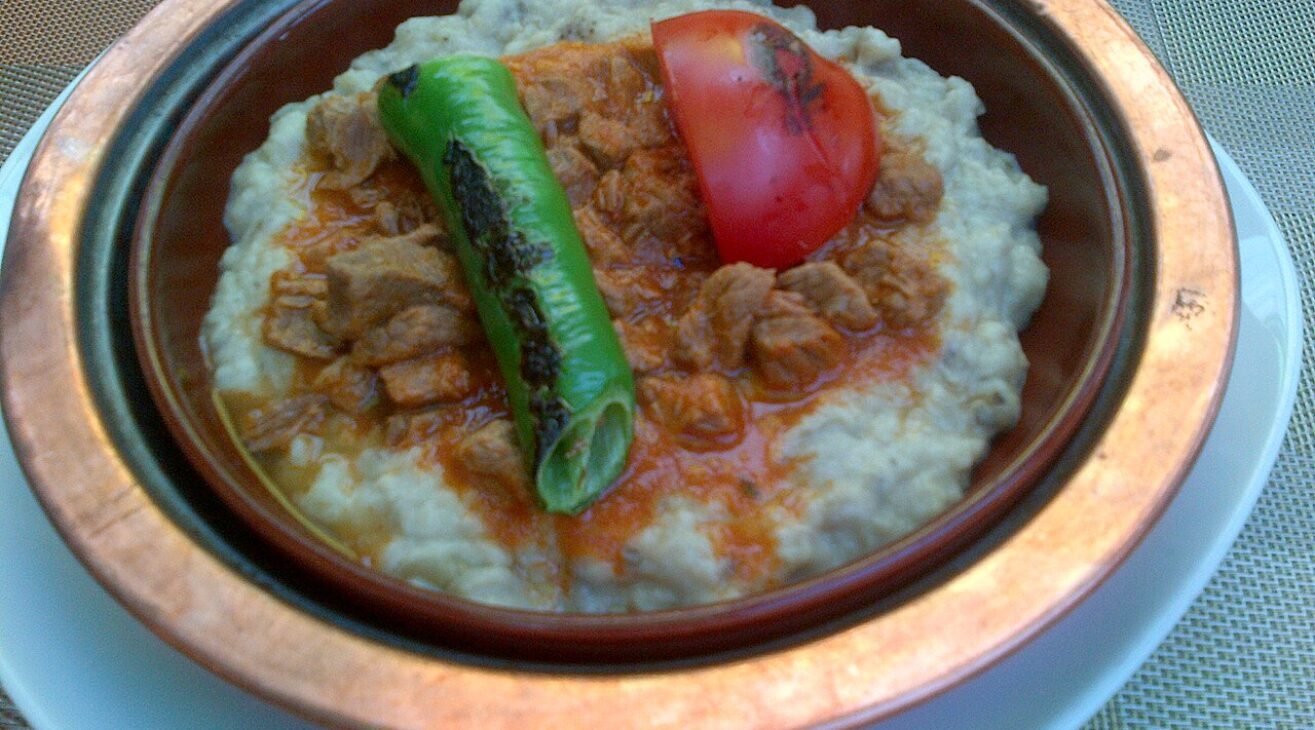
Hünkar beğendi is one of the great dishes of Ottoman cooking: chunks of lamb braised slowly with onion, tomato and peppers until they fall apart, spooned on to a bed of smoky aubergine purée enriched with butter, milk and cheese. The name translates as “the sovereign liked it”, and it is easy to see why.
It is the sort of dish you find on the counter of a good Turkish lokanta (canteen-style restaurant), and it is well within reach at home. The key is charring the aubergines properly over a flame so the purée tastes of smoke rather than just cream. Wikipedia’s entry on hünkârbeğendi covers the basics; below is a full method.
What is hünkar beğendi?
Hünkar beğendi (hün-kar beh-en-dee; also written hünkârbeğendi) has two parts. The beğendi is the purée: aubergines grilled until the skin blackens, peeled, mashed and cooked into a thick béchamel-style sauce, usually with grated kaşar (a mild, firm Turkish cheese). The topping is a tas kebabı-style stew of lamb or beef.
The story of the name
The most popular story says the dish was created in 1869, when the French Empress Eugénie visited Sultan Abdülaziz in Istanbul and a palace cook combined a French béchamel with Turkish smoked aubergine. It is a charming tale, but there is little hard evidence for it. What is certain is that the dish is firmly part of the Ottoman repertoire; the Turkish Ministry of Culture and Tourism’s Bursa office describes it as an Ottoman cuisine dish.
Variations
Beef is common in place of lamb, and some cooks grill the meat rather than stewing it. A plain beğendi without meat is also served as a side for köfte or chicken, and some restaurants top the purée with tas kebabı or even meatballs.
Ingredients
Serves 4.
For the lamb
- 700g boneless lamb shoulder or leg, cut into 3cm cubes
- 2 tbsp olive oil
- 15g butter
- 1 large onion, finely chopped
- 2 garlic cloves, finely chopped
- 1 long green pepper (sivri biber) or ½ green bell pepper, chopped
- 1 tbsp tomato paste
- 1 tbsp red pepper paste (biber salçası)
- 2 ripe tomatoes, grated (skins discarded)
- 500ml hot water
- ½ tsp dried thyme
- 1 tsp salt and ½ tsp black pepper
For the aubergine purée (beğendi)
- 1kg aubergines (about 4 medium)
- 1 tbsp lemon juice
- 50g butter
- 3 tbsp (30g) plain flour
- 400ml whole milk, warmed
- 60g kaşar cheese or mild Cheddar, finely grated
- ½ tsp salt and a pinch of grated nutmeg
How to make hünkar beğendi
1. Brown the lamb
Pat the lamb dry. Heat the oil and butter in a heavy casserole over a high heat and brown the meat in two batches, about 5 minutes per batch. Do not crowd the pan, or the meat will steam instead of colouring.
2. Build the stew
Lower the heat, add the onion and cook for 5 minutes until soft. Add the garlic and green pepper for 2 minutes, then stir in both pastes for a minute. Add the grated tomato, return the lamb, pour in the hot water and add the thyme, salt and pepper.
3. Braise until tender
Cover and simmer gently for 1 hour 15 minutes to 1 hour 30 minutes, stirring occasionally, until the lamb is tender enough to cut with a spoon. Uncover for the last 15 minutes so the sauce reduces to a glossy coating.
4. Char the aubergines
While the lamb cooks, prick the aubergines and set them directly over a gas flame or on a very hot barbecue, turning with tongs, for 15–20 minutes until the skin is black and the flesh collapses. Without a flame, grill them under the hottest grill for 30–40 minutes, turning. Leave to cool for 10 minutes.
5. Peel and chop
Slit the aubergines, scoop out the flesh and drop it into a bowl of cold water with the lemon juice for a few minutes to stop it darkening. Squeeze out well, discard any large seed clusters, and chop finely with a knife.
6. Make the beğendi
Melt the butter in a saucepan, add the flour and stir over a medium heat for 2 minutes until it smells nutty. Whisk in the warm milk a little at a time to make a smooth sauce. Stir in the aubergine and cook for 5 minutes, then beat in the cheese, salt and nutmeg until smooth and thick.
7. Serve
Spread the hot purée on a warm platter or in shallow bowls, make a well in the middle and spoon the lamb and its sauce on top. Scatter with a little chopped parsley if you like.
Watch: how to make hünkar beğendi
Arda Türkmen, one of Turkey’s best-known TV chefs, makes hünkar beğendi in this video (in Turkish, very clear to follow).
Tips for the best hünkar beğendi
- Choose firm, shiny aubergines with few seeds; long, slim ones have the least bitterness.
- Charring over a flame is what gives the purée its smoky flavour. The oven works, but the taste is milder.
- Squeeze the aubergine flesh well, or the purée will be watery and the béchamel will split.
- Use shoulder for the softest, richest stew; leg is leaner and cooks a little faster.
- The stew can be made a day ahead and reheated, but the beğendi is best made fresh.
What to serve with hünkar beğendi
Hünkar beğendi is rich, so keep the sides simple: plain Turkish rice pilaf, a sharp çoban salatası and some pickles. Start with a bowl of ezogelin çorbası for a proper lokanta-style meal, and finish with kazandibi. If you love smoked aubergine, try patlıcan salatası too.
Where to eat hünkar beğendi in London
Hünkar beğendi is a lokanta classic, so it is worth checking the daily trays at home-cooking restaurants rather than grill houses. See our Turkish home-cooking and lokanta restaurants in London, or start with our guide to the best Turkish restaurants in London.
- Üstün Lahmacun & Pide Salonu – Turkish home cooking in Newington Green
- Sofra Mayfair – Turkish home cooking in Soho & West End
- 27 Lahmacun – Turkish gözleme & mantı in Tottenham
- Antep Taş Fırın Harringay – Turkish home cooking in Harringay & Green Lanes
- OTE – Turkish home cooking in Soho & West End
- Haringey Çorbacısı – Turkish home cooking in Harringay & Green Lanes
See all 15 Home Cooking (Lokanta) places in London
Hünkar beğendi FAQs
What does hünkar beğendi mean?
It roughly means “the sovereign liked it” or “the sultan was pleased”. In English it is often called sultan’s delight.
Can I make hünkar beğendi with beef?
Yes. Use beef chuck or braising steak cut into 3cm cubes and allow an extra 20–30 minutes of cooking until it is tender.
What cheese goes in the aubergine purée?
Kaşar is traditional. A mild Cheddar, Gruyère or a mix of mozzarella and Parmesan all work well; you want something that melts smoothly and is not too salty.
Can I make it without a gas hob?
Yes. Grill the aubergines under a very hot grill or roast them at 230°C (210°C fan) for about 40 minutes, turning once. A pinch of smoked paprika in the purée makes up for some of the missing smokiness.
Photo: E4024, CC BY-SA 4.0, via Wikimedia Commons.