Tantuni recipe: Mersin-style spiced beef wraps
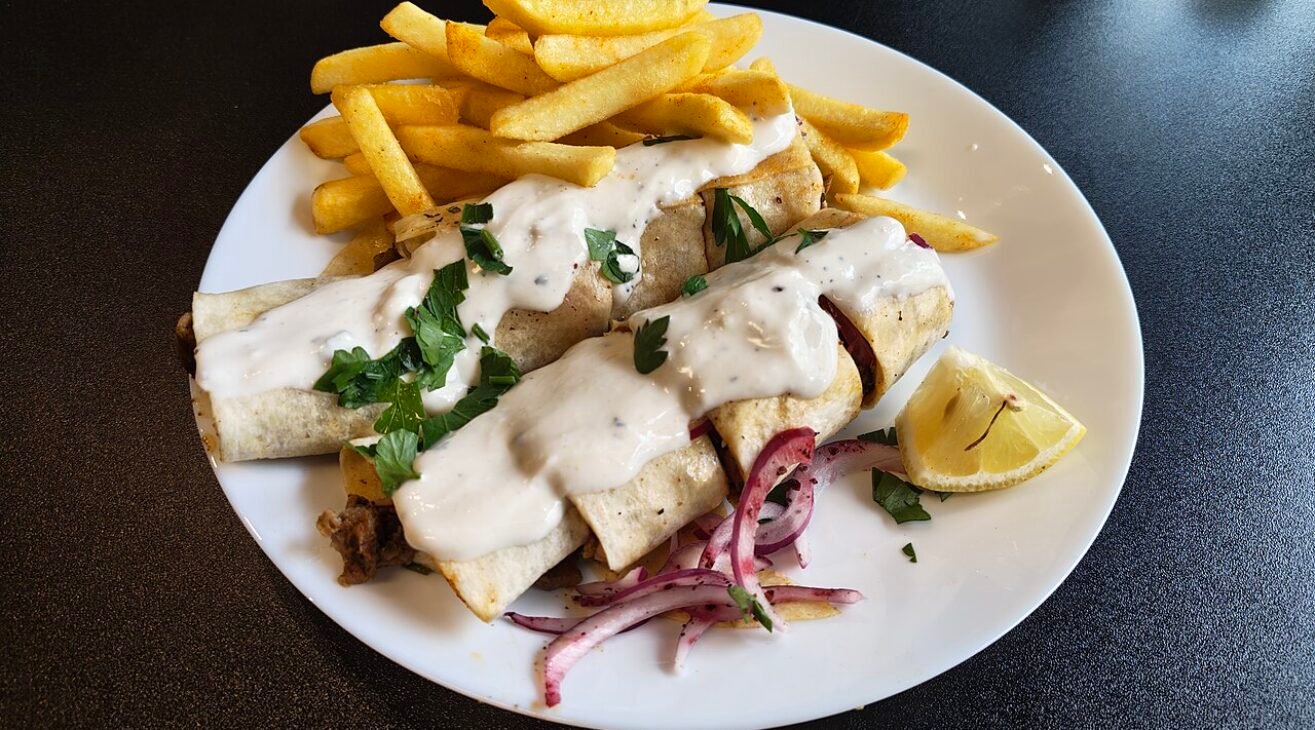
Tantuni is the street food of Mersin on Turkey’s southern coast: tiny pieces of beef, first simmered until tender, then fried on a hot griddle with chilli flakes and a splash of water until juicy and slightly crisp. The meat is rolled in thin lavash bread with tomato, parsley and sumac-dressed onion and eaten with lemon, pickled chillies and a cold drink. Wikipedia’s tantuni article notes that “Mersin Tantunisi” received Geographical Indication registration from the Turkish Patent and Trademark Office in 2017.
It is quick, cheap and addictive. You do not need the special domed griddle used by Mersin’s tantuni masters: a wide frying pan or wok gives a very good result at home.
What is tantuni?
In Mersin, tantuni is cooked on a sac, a large convex steel griddle with a dip in the middle where the meat and oil collect. The cook fries the pre-boiled meat with cottonseed oil and red pepper flakes, splashing in water to create steam, and presses the bread onto the meat so it soaks up the juices.
Early versions used offal; beef cuts such as ribeye or flank took over from the 1970s and 1980s. The Wikipedia overview of Turkish cuisine describes it as meat cut in very small pieces and served in lavash, a speciality of Mersin province.
Ways to serve it
The most common style is dürüm, rolled in lavash. You can also have it ekmek arası, stuffed into half a loaf of Turkish bread, or yoğurtlu, where the roll is sliced and topped with garlic yoghurt and hot melted butter.
Ingredients
Makes 4 wraps.
For the meat
- 500g beef topside, rump or sirloin, trimmed of sinew
- 1 tsp salt (for the cooking water)
- 3 tbsp sunflower or cottonseed oil
- 1–2 tsp pul biber (Turkish chilli flakes)
- ½ tsp isot (Urfa chilli) or extra pul biber
- ½ tsp ground cumin
- ½ tsp salt
- 4–6 tbsp of the meat cooking water
For the salad
- 1 red onion, thinly sliced
- 1 tsp sumac
- 2 ripe tomatoes, finely diced
- A large handful of flat-leaf parsley, chopped
To serve
- 4 large thin lavash or dürüm wraps
- 1 lemon, cut into wedges
- Pickled chillies (cin biber or similar)
How to make tantuni
1. Slice the beef
Freeze the beef for 30 minutes to firm it up, then cut it into very thin strips about 3mm thick, and then into small pieces. The smaller the better.
2. Simmer the beef
Put the beef in a pan, cover with water, add 1 tsp salt and bring to the boil. Skim off the foam, then simmer for 30–40 minutes until tender. Drain, keeping a cupful of the cooking water.
3. Make the salad
Rub the sliced onion with the sumac and a pinch of salt, then mix with the tomatoes and parsley.
4. Fry the meat
Heat the oil in a large frying pan or wok over a high heat. Add the beef, pul biber, isot, cumin and salt and fry for 4–5 minutes, stirring and pressing the meat against the hot pan. Add a couple of tablespoons of the cooking water at a time so it sizzles and steams, keeping the meat juicy.
5. Warm the bread
Push the meat to one side and press a lavash briefly onto the hot meat and pan juices for a few seconds on each side, so it softens and soaks up the flavour.
6. Roll and serve
Spoon a quarter of the meat along the middle of each lavash, top with the salad and a squeeze of lemon, then roll tightly. Serve with more lemon and pickled chillies.
Watch: how to make tantuni
Refika’s video shows the whole method, including the classic garnish.
Tips for the best tantuni
- Cut the meat as small as you can. Very fine pieces are what give tantuni its distinctive texture.
- Do not skip the simmering stage: it makes the meat tender before it hits the hot pan.
- Keep the pan very hot and add the cooking water little by little. You want sizzle and steam, not a stew.
- Cottonseed oil is traditional, but sunflower oil works well and is easier to find in the UK.
- For a richer version, serve it yoğurtlu: slice the wrap, spoon over garlic yoghurt and drizzle with chilli butter.
What to serve with tantuni
In Mersin, tantuni comes with lemon, pickled chillies and a drink of ayran or şalgam (fermented purple carrot juice). Add a spoonful of acılı ezme for extra heat, or make a street-food spread with kumpir and lahmacun.
Where to eat tantuni in London
Tantuni is still a speciality in London, but you will find it at a few Turkish street-food spots and grill houses. Browse our Turkish street food listings and our guide to late-night Turkish food in London.
- Lalezar Turkish Kitchen – Turkish street food in Shoreditch & Hoxton
- TURAN Turkish & Mediterranean Cuisine – Turkish kebab & döner in Clerkenwell & Farringdon
- ÇiğKöftem Harringay – Turkish çiğ köfte in Harringay & Green Lanes
- Mangal Turkish Pizza – Turkish kebab & döner in Dalston & Stoke Newington
- Midye & Kokoreç Garden – Turkish seafood in Edmonton
- Turkish Gözleme – Turkish gözleme & mantı in Soho & West End
See all 23 Street Food places in London
Tantuni FAQs
What meat is used in tantuni?
Beef is traditional, usually lean cuts such as topside or ribeye trimmed of sinew. Lamb is sometimes used, and chicken tantuni is a popular modern version.
Why is the meat boiled first?
Simmering makes the small pieces tender before they are fried. The quick fry on a hot pan then adds flavour, colour and a slight crispness.
Can I make chicken tantuni?
Yes. Use boneless chicken thighs, cut very small. Simmer for 10–15 minutes rather than 30–40, then fry in the same way.
What is the difference between tantuni and döner?
Döner is meat roasted on a vertical spit and sliced off. Tantuni is small pieces of boiled beef fried on a griddle with chilli, so it is softer, juicier and spicier.
Photo: Fay Freak, CC BY-SA 4.0, via Wikimedia Commons.