İskender kebab recipe: lamb, pide, tomato butter and yoghurt
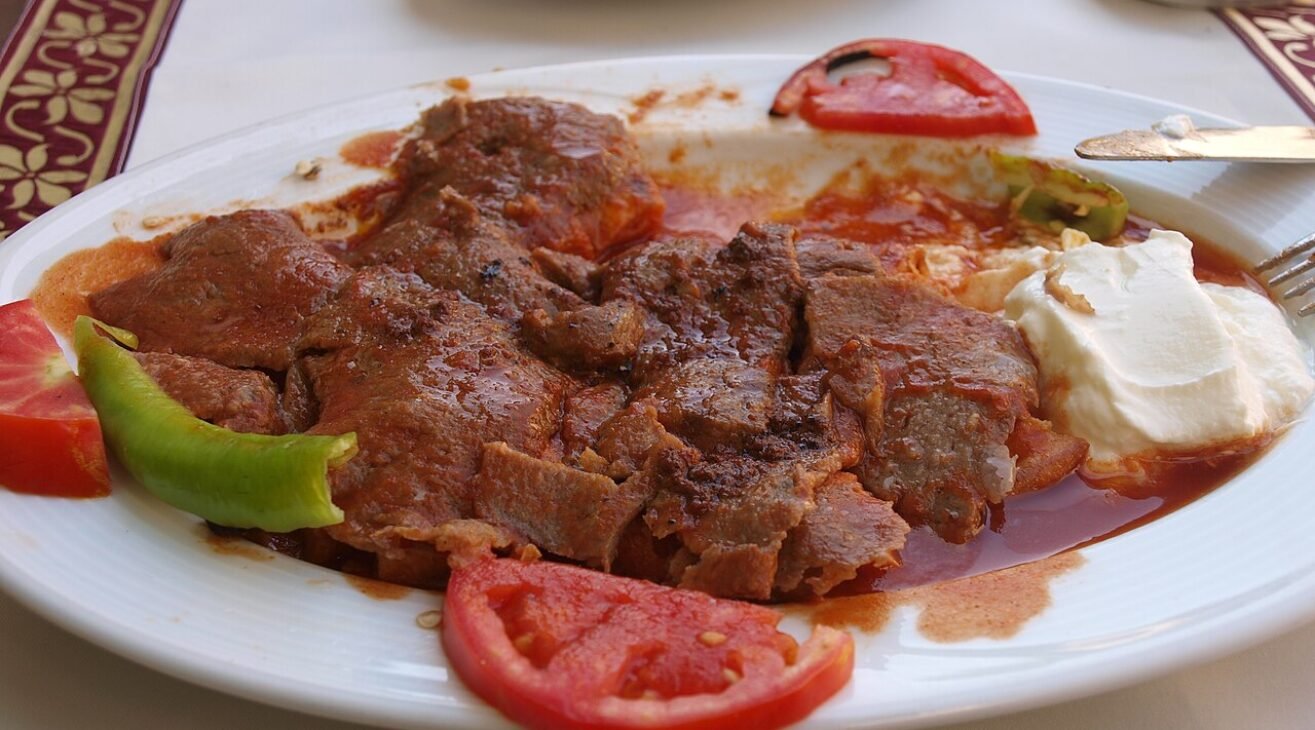
İskender kebab is one of the most indulgent plates in Turkish cooking: thin slices of lamb laid over cubes of soft pide bread, drenched in a buttery tomato sauce, served with a mound of thick yoghurt, then finished at the table with hot, foaming butter poured over the top. It is rich, generous and best eaten without hurry.
The dish comes from Bursa in northwest Turkey and is named after İskender Efendi, who served it there in the late nineteenth century. The Wikipedia entry on İskender kebap notes that the name Kebapçı İskender is trademarked by his descendants, the İskenderoğlu family, who still run the restaurant in Bursa. Elsewhere it is often sold as Bursa kebabı or Uludağ kebabı. This recipe recreates it at home without a vertical döner grill.
What is İskender kebab?
İskender kebab is made with döner-style lamb, sliced thin from a rotating spit and laid over pieces of pide bread. Tomato sauce is spooned over, yoghurt goes alongside, and melted butter, traditionally sheep’s milk butter, is poured over at the table. The Kebapçı İskender history page dates the family business to 1867. Most Turkish kebab houses serve their own version, and the quality of the butter and the bread makes all the difference.
İskender at home
Few home kitchens have a vertical spit, so this recipe uses lamb leg or neck fillet, sliced very thin, marinated and seared fast in a very hot pan. You get the browned edges and tender centre of döner without the equipment. Thin slices of leftover roast lamb, reheated in the tomato sauce, also work well.
Ingredients
Serves 4.
For the lamb
- 600g boneless lamb leg steaks or neck fillet, trimmed
- 1 small onion, grated, juice squeezed out and kept (about 3 tbsp juice)
- 2 tbsp plain yoghurt
- 2 tbsp olive oil, plus extra for frying
- 1 tsp sweet paprika
- ½ tsp ground cumin
- ½ tsp dried thyme
- 1 tsp salt
- ½ tsp black pepper
For the tomato sauce
- 30g butter
- 2 tbsp tomato purée
- 1 tsp Turkish red pepper paste (biber salçası), optional
- 250ml hot water or lamb stock
- ½ tsp salt
- A pinch of sugar
To assemble
- 1 large Turkish pide bread (about 400g), or 4 thick pitta breads
- 400g thick plain yoghurt, at room temperature
- 100g butter, ideally sheep’s milk butter or a good unsalted butter
- 4 long green peppers and 2 tomatoes, grilled, to serve
How to make İskender kebab
1. Slice and marinate the lamb
Put the lamb in the freezer for 30 minutes to firm up, then slice it across the grain as thinly as you can, about 3mm. Mix the onion juice, yoghurt, olive oil, spices, salt and pepper in a bowl, add the lamb and toss well. Cover and marinate in the fridge for at least 2 hours, or overnight.
2. Make the tomato sauce
Melt the 30g butter in a small pan, add the tomato purée and pepper paste and cook for 1 minute, stirring. Whisk in the hot water or stock, salt and sugar and simmer for 5 minutes until it coats the back of a spoon. Keep warm.
3. Toast the bread
Heat the oven to 200°C (180°C fan). Cut the pide into 3cm cubes, spread on a baking tray and toast for 6–8 minutes, until crisp at the edges but still soft inside.
4. Sear the lamb
Heat a large, heavy frying pan over a high heat with a thin film of oil. Shake the excess marinade off the lamb and sear in small batches for 1–2 minutes, until browned at the edges and just cooked. Do not crowd the pan or it will stew. Keep warm while you cook the rest.
5. Assemble
Divide the bread between four warm plates and spoon over a little tomato sauce to moisten it. Pile the lamb on top and spoon over more sauce. Add a large spoonful of yoghurt to the side of each plate, and the grilled peppers and tomatoes.
6. Pour the butter
Melt the 100g butter in a small pan until it foams and just starts to turn nutty. Take it to the table and pour it, sizzling, over each plate. Eat straight away.
Watch: how to make İskender kebab
In this video Refika’s Kitchen shows a home-style way of building İskender from pide, sauce, yoghurt and butter.
Tips for the best İskender kebab
- Slice the lamb as thinly as possible. Part-freezing it first makes this far easier.
- Get the pan very hot and cook in batches. You want colour, not grey, stewed meat.
- Use good bread. Soft Turkish pide from a Turkish grocer soaks up the sauce and butter without falling apart.
- Bring the yoghurt to room temperature so it does not cool the plate.
- Do not skip the butter at the table. The sizzle as it hits the plate is part of the dish.
What to serve with İskender kebab
İskender is a complete meal, so keep it simple: a bowl of mercimek çorbası to start, a glass of cold ayran with it, and something light to finish, such as a bowl of chilled sütlaç (rice pudding). If you are feeding a crowd with mixed tastes, serve it alongside Adana kebab for a kebab-house spread.
Where to eat İskender kebab in London
İskender is on the menu of most Turkish kebab houses in London, usually made with döner from the spit. Browse our kebab and döner listings, or see our guide to late-night Turkish food in London for places that serve it into the small hours.
- Mangal Turkish Pizza – Turkish kebab & döner in Dalston & Stoke Newington
- Antepliler Döner – Turkish kebab & döner in Harringay & Green Lanes
- Çınar Grill – Turkish kebab & döner in Walthamstow
- Meat Et & Döner Southgate – Turkish kebab & döner in Southgate
- Le Bab Covent Garden – Turkish kebab & döner in Soho & West End
- Le Bab Carnaby – Turkish kebab & döner in Soho & West End
See all 81 Kebab & Döner places in London
İskender kebab FAQs
What is the difference between İskender and döner kebab?
Döner is the meat cooked on a vertical spit. İskender is a plated dish made from döner meat, served on bread with tomato sauce, yoghurt and melted butter.
Can I make İskender with chicken?
Yes. Use thinly sliced boneless chicken thighs, marinated in the same way and seared until cooked through. Many Turkish restaurants offer a chicken version.
Is İskender kebab spicy?
Not usually. The tomato sauce is mild and buttery. Add more hot pepper paste or a pinch of chilli flakes if you like some heat.
Why is it called İskender?
It is named after İskender Efendi, the Bursa cook credited with creating it in the nineteenth century. İskender is the Turkish form of Alexander.