Zeytinyağlılar: Turkey’s olive oil vegetable dishes
Zeytinyağlı (zay-teen-yah-LUH) means “with olive oil”, and zeytinyağlılar is the name for Turkey’s big family of vegetable dishes cooked gently in olive oil and eaten cool or at room temperature: green beans, artichokes, leeks, stuffed aubergines, vine leaves. They are made without meat, they come from the olive-growing west of the country, especially the Aegean, and in a Turkish home they are a light main course on a hot day as often as a starter.
How they are cooked
Almost every zeytinyağlı dish follows the same pattern. Onion is softened slowly in a generous amount of olive oil; the vegetable goes in, often with a little tomato or carrot; a pinch of sugar balances the acidity; then a small amount of water is added and the pot is covered and left on a low heat until the vegetable is completely tender, not al dente. A squeeze of lemon goes in at the end for artichokes and leeks.
Then comes the step that defines them: the dish is left to cool in its pot, so the vegetable soaks up the oil and juices as it settles. That is why they are served cool. Olive oil tastes fruity and light at room temperature, while butter or meat fat would set and turn greasy, which is why these are never made with either.
The classics to know
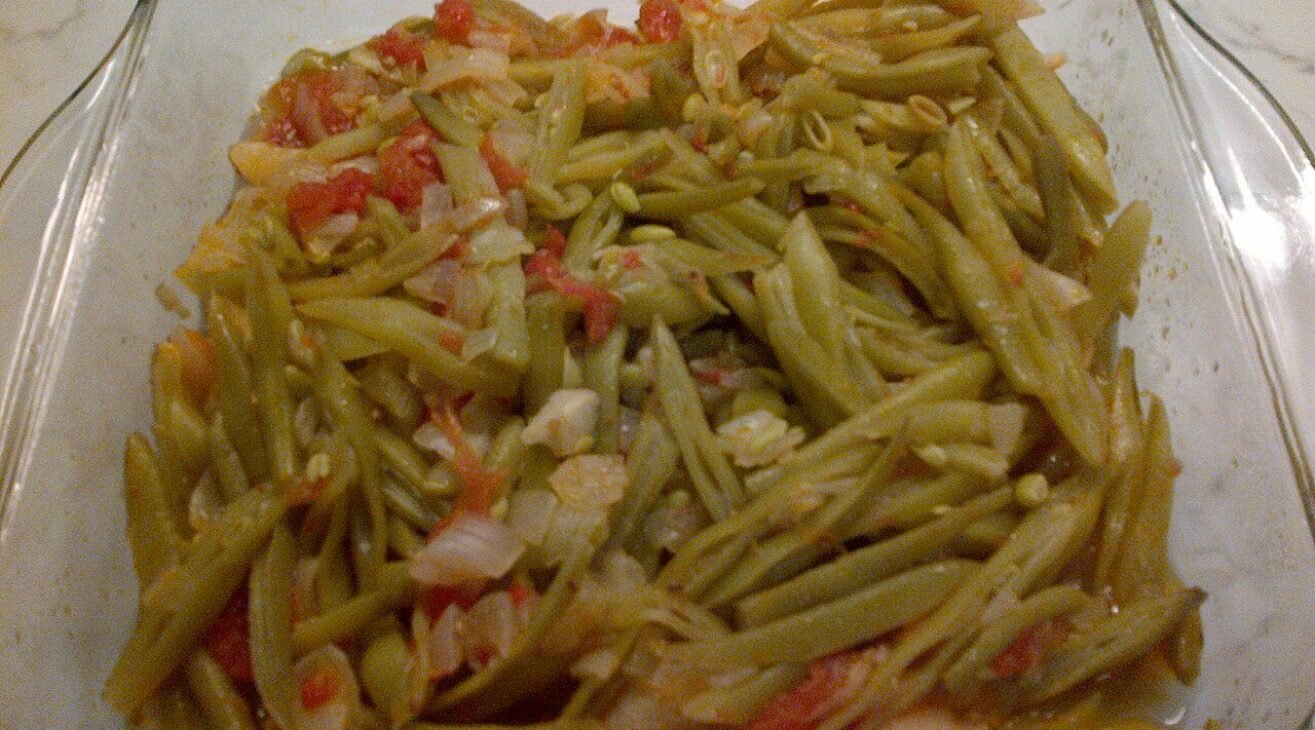
- Zeytinyağlı taze fasulye: flat green beans with tomato and onion. The summer staple, and the one you are most likely to see in London.
- Enginar: artichoke hearts with carrot, peas and dill, sometimes with potato. Most associated with İzmir and the coast around it.
- Pırasa: leeks cut into chunks, with carrot and a little rice. A winter dish.
- İmam bayıldı: whole aubergines stuffed with onion, garlic and tomato. See our imam bayıldı recipe.
- Yaprak sarma: vine leaves rolled round rice with herbs, pine nuts and currants. See our yaprak sarma recipe; do not confuse it with the hot, meat-filled kind.
- Taze bakla: young broad beans cooked in their pods with dill, served with garlic yoghurt.
- Barbunya: borlotti beans in olive oil with tomato and carrot.
- Kereviz: celeriac with carrot and orange or lemon, a winter dish.
- Deniz börülcesi: samphire, blanched and dressed with olive oil, lemon and garlic. An Aegean meze.
- Bamya: okra with tomato, a summer dish.
They follow the seasons: leeks, celeriac and artichokes in winter and spring, beans, okra and aubergines in summer.
How to order them in London
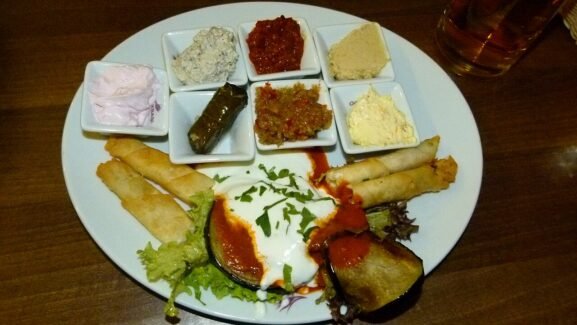
True zeytinyağlılar are home and lokanta food, so the best place to find them is a lokanta-style counter, where cold dishes sit on display beside the hot ones. Point at two or three and ask for a mixed plate; if you are not sure which side of the counter a dish comes from, ask “soğuk mu?” (“is it cold?”). On meze menus, the olive-oil vegetables are usually listed among the cold meze and priced per plate.
Some London places that list them: Gem on Upper Street has olive-oil green beans among its cold meze, and Laz @Camden serves olive-oil vegetables such as barbunya pilaki. Look first at the home cooking and lokanta list, then the meze restaurant list, and see popular Turkish dishes for more.
They suit vegetarians well; our guide to vegetarian Turkish food covers what to order and what to check, and the words to ask about stock are in our Turkish food phrases guide.
Words worth knowing
- Zeytinyağı: olive oil.
- Sebze: vegetable.
- Taze fasulye: fresh green beans.
- Enginar: artichoke.
- Pırasa: leek.
- Sarma / dolma: rolled or stuffed vegetables.
- Soğuk: cold.
Our pick below is not a zeytinyağlı specialist. It is a Palmers Green restaurant for everyday Turkish cooking, with cold meze on the menu alongside its slow-cooked lamb.
Our pick: Tandır, Palmers Green
A modern Turkish restaurant on Green Lanes, named after the slow-cooking method tandır. Its listing names tandır lamb, pide and lahmacun, along with meze such as hummus and muhammara, and it serves a Turkish breakfast for two, so it is a good place to see everyday Turkish cooking done carefully. See Tandır on Turkish Dish.
- Stratford Best Meze Grill – Turkish home cooking in Stratford
- Esnaf Lokantası – Turkish home cooking in Enfield
- Haringey Çorbacısı – Turkish home cooking in Harringay & Green Lanes
- Hanımeli – Turkish gözleme & mantı in Dalston & Stoke Newington
- Çorba Dünyası – Turkish home cooking in Edmonton
- Iznik – Turkish home cooking in Highbury
See all 15 Home Cooking (Lokanta) places in London
Zeytinyağlı FAQs
What does zeytinyağlı mean?
“With olive oil”. The word covers Turkish vegetable dishes cooked in olive oil and served cool.
Are zeytinyağlı dishes vegan?
Most are, since they are cooked without meat or butter. A few are served with yoghurt, broad beans especially, so ask for it on the side if you need to.
Why are they served cold?
Olive oil tastes better cool, and the vegetables take on more flavour as they rest in the pot. They are never fridge-cold, though: take them out half an hour before eating.
How long do they keep?
Two to three days in the fridge, covered. Most taste better on the second day.
Photo: E4024, CC BY-SA 4.0, via Wikimedia Commons.