Pide vs lahmacun: what’s the difference?
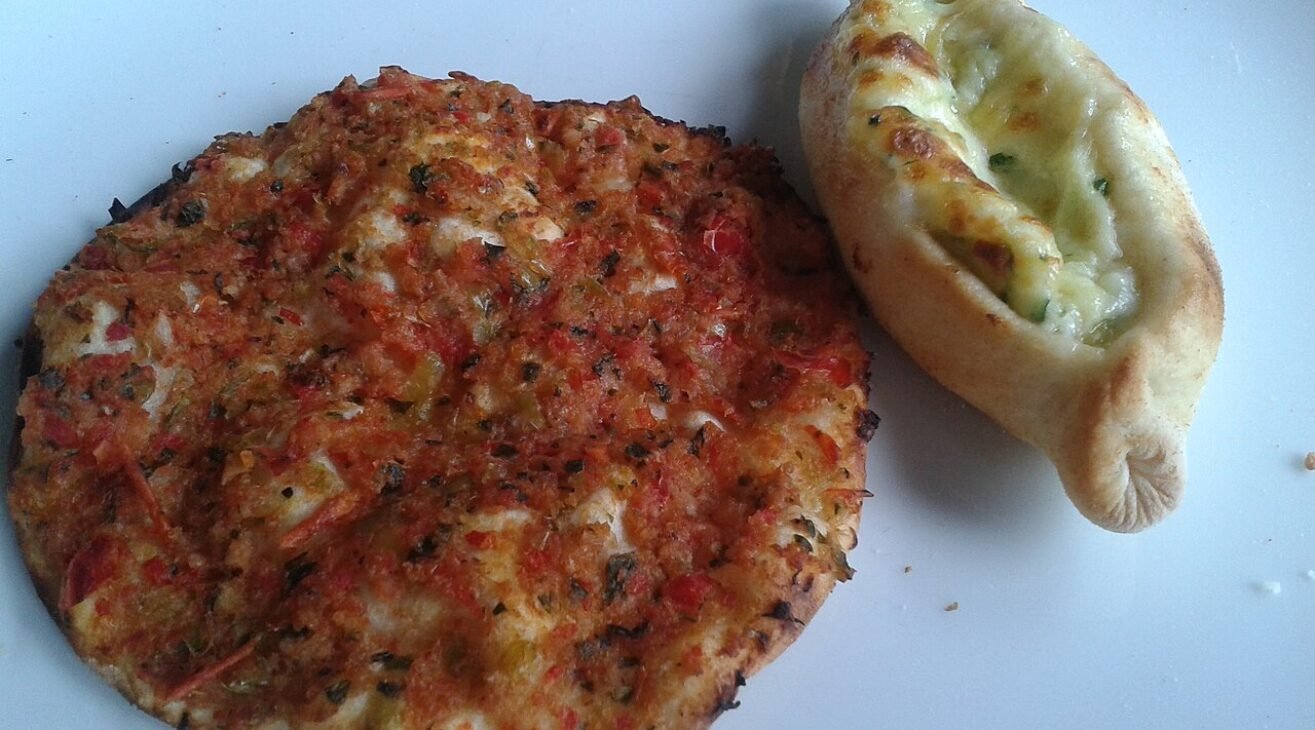
Pide is an oval Turkish flatbread with thicker dough, folded-in edges and an open centre piled with toppings. Lahmacun is a much thinner, round flatbread spread with a spiced minced-meat mixture. Both are baked in a very hot oven, but pide is the more filling dish and lahmacun the lighter, crisper one.
English menus often call both “Turkish pizza”, which is where the confusion starts. Neither is really a pizza: pide has a folded rim and an open centre, and lahmacun is a thin round with a spiced meat topping and no cheese.
Pide: the thick, filled one
Pide dough is stretched into a long oval, the filling goes down the middle, and the sides are folded in so the centre stays open, giving the boat shape. It bakes in a few minutes in a very hot stone or wood-fired oven, and the crust can be soft or crunchy depending on the region. Round pides are made too, especially around the Black Sea, the heartland of pide; Bafra and Trabzon each have their own style.
- Kıymalı: minced meat, the classic.
- Kuşbaşılı: small cubes of lamb with tomato and pepper.
- Peynirli: white cheese and herbs, a good vegetarian choice.
- Pastırmalı: topped with pastırma, the spiced dry-cured beef, often with egg.
- Yumurtalı kaşarlı: egg and kaşar cheese.
- Sucuklu: spicy sausage, usually with cheese.
- Spinach, mushroom and aubergine versions for vegetarians.
If you like the Black Sea style, our Karadeniz pide recipe shows how it is done at home.
Lahmacun: the thin, crisp one
Lahmacun is rolled almost paper-thin and spread with raw minced lamb or beef mixed with onion, tomato, red pepper, garlic and parsley, then baked until the edges crisp. There is no cheese and no tomato sauce. You pile on parsley, onion and lemon, roll it up and eat it by hand.
The name comes from the Arabic for “meat with dough”, and it is made across south-east Turkey and northern Syria; Antep versions lean on garlic, Urfa ones on onion. In 2025 the EU registered Antep lahmacunu as a protected geographical indication. To make it at home, our lahmacun recipe covers the dough and the topping.
Pide vs lahmacun at a glance
- Shape: pide is oval with folded edges; lahmacun is round and flat
- Dough: pide is thicker and breadier; lahmacun is paper-thin and crisp
- Topping: pide can be filled with meat, cheese, egg or vegetables; lahmacun is almost always spiced minced meat
- Fills you up: a pide is a main course; lahmacun is lighter, so people often order a couple or share one as a starter
- Price: a lahmacun is almost always cheaper than a pide
For more on the breads behind both, see our Turkish bread guide.
Ordering in London
A lahmacun is usually cheaper than a pide, and many London places sell lahmacun in twos or threes. A pide is a main for one, or the centrepiece when two or three people share. A good first order is a lahmacun each to start and one pide in the middle. For a first pide, kıymalı or peynirli is the place to begin; if you do not like heat, ask whether the lahmacun topping is spicy, and ask whether the pide comes with egg or cheese, as practice varies.
Wood-fired pide houses cluster in north London; ÖzAntepliler on Hertford Road in Ponders End is one, baking both in the same wood oven. Browse the pide and lahmacun restaurants on our site, and see our guide to lahmacun and pide in London. For more on the breads behind both, see our Turkish bread guide; vegetarians have plenty of choice too, as our vegetarian Turkish food guide explains.
Our pick: Pide & Co, Holborn
A pide and lahmacun restaurant on Kingsway that specialises in Kayseri-style pide baked in ovens shipped from Turkey. The menu has kuşbaşılı pide (diced lamb with tomato, green pepper and parsley) and classic and vegan lahmacun, so you can compare the two side by side. See Pide & Co on Turkish Dish.
- Kervan Saray Romford – Turkish ocakbaşı & grill in Romford
- ÖzAntepliler Pide & Lahmacun – Turkish pide & lahmacun in Enfield
- Ateş Taş Fırın – Turkish bakery & börek in Chingford
- Antep Taş Fırın Harringay – Turkish home cooking in Harringay & Green Lanes
- Öz Erciyes – Turkish ocakbaşı & grill in Tottenham
- EaTurkish – Turkish kebab & döner in Charlton
See all 46 Pide & Lahmacun places in London
Pide and lahmacun: common questions
Is lahmacun a pizza?
Not really. It is a thin flatbread with a spiced meat topping and usually no cheese or tomato sauce, so it is closer to a crisp, savoury flatbread than to Italian pizza. “Turkish pizza” is just a handy nickname.
Is pide the same as lahmacun?
No. Pide has thicker dough, an oval shape with folded edges and a wider range of fillings. Lahmacun is thin, round and topped only with spiced minced meat.
Which is better for vegetarians?
Pide, because cheese, spinach and mushroom versions are standard. Some restaurants also make vegetarian lahmacun, but traditional lahmacun is meat, so check the menu.
Does pide always have cheese?
No. Peynirli pide is made with cheese, but minced meat, diced meat, cured beef and vegetable pides exist, and some are made without cheese.
How do you eat lahmacun?
Pile parsley, sliced onion and tomato on top, squeeze over lemon, roll it up and eat it by hand. It is light, so it works well as a starter.
Photo: E4024, CC BY-SA 4.0, via Wikimedia Commons.