Cacık recipe: Turkish cucumber, garlic and yoghurt
Cacık (pronounced jah-JUK) is Turkey’s cucumber and yoghurt dish, and it is looser, cooler and more herby than most dips. Yoghurt is mixed with grated or chopped cucumber, a little garlic, dried mint and dill, then thinned with cold water until it can be eaten with a spoon. It takes ten minutes and no cooking, and it tastes better after half an hour in the fridge.
Cacık is served across Turkey with grilled meat, pilav, fried fish and börek, and it sits on most meze tables. In summer it is often thinned further and served with ice as a cold soup beside a plate of pilav, and in an ocakbaşı it is the cooling bowl that sits next to the Adana. Tzatziki is a cousin, but cacık is looser; more on that below.
What is cacık?
Cacık is a cold dish of yoghurt and cucumber, seasoned with garlic, salt and herbs. In Turkey it is eaten as a meze and as a side with rice or kebabs, and in hot weather it can be thinned enough to eat almost like a cold soup. It is looser than Greek tzatziki, which is a thick dip made with strained yoghurt and drained cucumber. Cacık uses water to loosen the yoghurt, so you spoon it over food or have it between mouthfuls of something rich and spicy.
Which yoghurt and cucumber to use
Use plain whole-milk yoghurt, not low fat, because the creaminess holds up once it is thinned. Ordinary full-fat natural yoghurt is a good match. Greek-style yoghurt is fine too, but you will need a little more water. For the cucumber, choose firm, thin-skinned ones. Small cucumbers have fewer seeds and the best crunch. Peel them only if the skin is thick or waxy.
Popular variations
Some cooks use dried mint only, others prefer fresh dill and parsley. A thicker version made with little or no water is eaten as a dip rather than a sauce. Some add crushed walnuts or a squeeze of lemon, and a few use a splash of white vinegar. A spoonful of olive oil, or a pinch of pul biber (Turkish chilli flakes) on top, is common.
Ingredients
Serves 4 as a side or meze. Prep time: 10 minutes. Cooking time: 0 minutes.
For the cacık
- 500g plain whole-milk yoghurt
- 250 to 300g cucumber (1 large or 3 small)
- 2 garlic cloves
- 1/2 tsp fine sea salt, plus more to taste
- 100 to 150ml cold water
- 1 tbsp dried mint, or a small handful of fresh mint, finely chopped
- 2 tbsp finely chopped fresh dill
To finish
- 1 tbsp extra virgin olive oil
- 1/2 tsp pul biber or a pinch of dried mint (optional)
How to make cacık
1. Crush the garlic
Peel the garlic and crush it to a smooth paste with the salt, using the flat of a knife or a pestle and mortar. The salt breaks it down and mellows the raw bite. If it is a very strong bulb, use one clove instead of two.
2. Prepare the cucumber
Wash the cucumber and peel it if the skin is tough. Grate it on the coarse side of a box grater, or dice it finely if you want more crunch. Do not squeeze it dry, since a little of the juice flavours the yoghurt, but tip away any liquid that pools in the bowl.
3. Loosen the yoghurt
Put the yoghurt in a bowl and whisk it with a fork until smooth. Add the cold water slowly, 50ml at a time, stirring after each addition, until it falls off a spoon in a thick, pourable stream like double cream.
4. Mix everything
Stir in the garlic paste, cucumber, mint and dill. Taste and add more salt if needed. Cacık should taste fresh and a little sharp, with garlic noticeable but not overpowering. Add another splash of water if it feels too stiff.
5. Chill and finish
Cover and chill for at least 30 minutes so the flavours meld. Before serving, stir again and check the texture, adding a splash of cold water if it has thickened. Spoon into bowls, trickle over the olive oil, and sprinkle with the pul biber or extra mint if using. Serve cold.
Watch: how to make cacık
Shows three ways of making cacık, in Turkish, which is useful for judging how thin or thick you prefer it.
Tips for the best cacık
- Use cold yoghurt and cold water so the cacık is properly refreshing as soon as it is made.
- Add the water gradually. Yoghurt brands vary a lot, and it is easier to thin than to thicken.
- Salt the cucumber lightly or not at all before mixing, otherwise it releases too much water.
- Crush the garlic with salt rather than adding it raw and chunky, which turns harsh after an hour.
- Dried mint is the classic choice. Rub it between your fingers to wake it up before adding.
What cacık goes with
Spoon cacık over grilled lamb, köfte, tavuk şiş or fried aubergine, or serve it beside rice pilav, bulgur and börek. It is also good with fried fish and with spicy dishes, where the cool yoghurt takes the heat down. Put out a basket of warm bread for scooping.
How to store cacık
Keep cacık in a covered container in the fridge for up to 2 days, and put it back within 2 hours of serving. It loosens as the cucumber releases water, so stir well and add a spoonful of fresh yoghurt if needed. Do not freeze it, as the yoghurt splits.
Where to eat cacık in London
Cacık is on nearly every Turkish menu in London, usually as a cold meze to eat with bread or beside a kebab. TAS Bloomsbury includes it in its meze, Fez Mangal in Mayfair serves it with mint alongside its grills, and The Olive in Leytonstone has it among the starters. More places: our meyhane listings and the best Turkish restaurants in London.
- Kismet – Turkish meyhane in Borough & Southwark
- Akşam Güneşi Meze Bar – Turkish meyhane in Edmonton
- Sarıyer Balık – Turkish meyhane in Newington Green
- The Midyeci – Turkish meyhane in Dalston & Stoke Newington
See all 4 Meyhane (Rakı & Meze) places in London
Cacık FAQs
What is the difference between cacık and tzatziki?
Tzatziki is a thick Greek dip made with strained yoghurt, drained cucumber, olive oil and often vinegar or lemon. Cacık is loosened with water, usually flavoured with mint and dill, and is eaten more like a cold sauce or soup.
Can I make cacık ahead of time?
Yes, a few hours ahead is ideal. Mix it, cover it and chill it, then stir before serving. If you want to make it a day ahead, keep the cucumber and garlic separate and fold them in an hour before you eat, so the cucumber stays crisp and the garlic stays mild.
Why is my cacık watery?
The cucumber has released too much liquid, or too much water was added. Stir in a couple of spoonfuls of thick yoghurt to bring it back. Next time, tip away any juice that pools around the grated cucumber before it goes in, but do not squeeze it dry.
Can I use Greek yoghurt or a dairy-free yoghurt?
Greek yoghurt works well, though you will need more water to loosen it. Unsweetened soya or coconut yoghurt also works, but use less garlic and add a squeeze of lemon, since plant yoghurts are milder and slightly sweeter. Taste and adjust the salt at the end.
More Turkish recipes
- Haydari recipe: thick Turkish yoghurt dip with garlic and herbs
- Ayran recipe: how to make Turkish yoghurt drink at home
- Çoban salatası recipe: classic Turkish shepherd’s salad
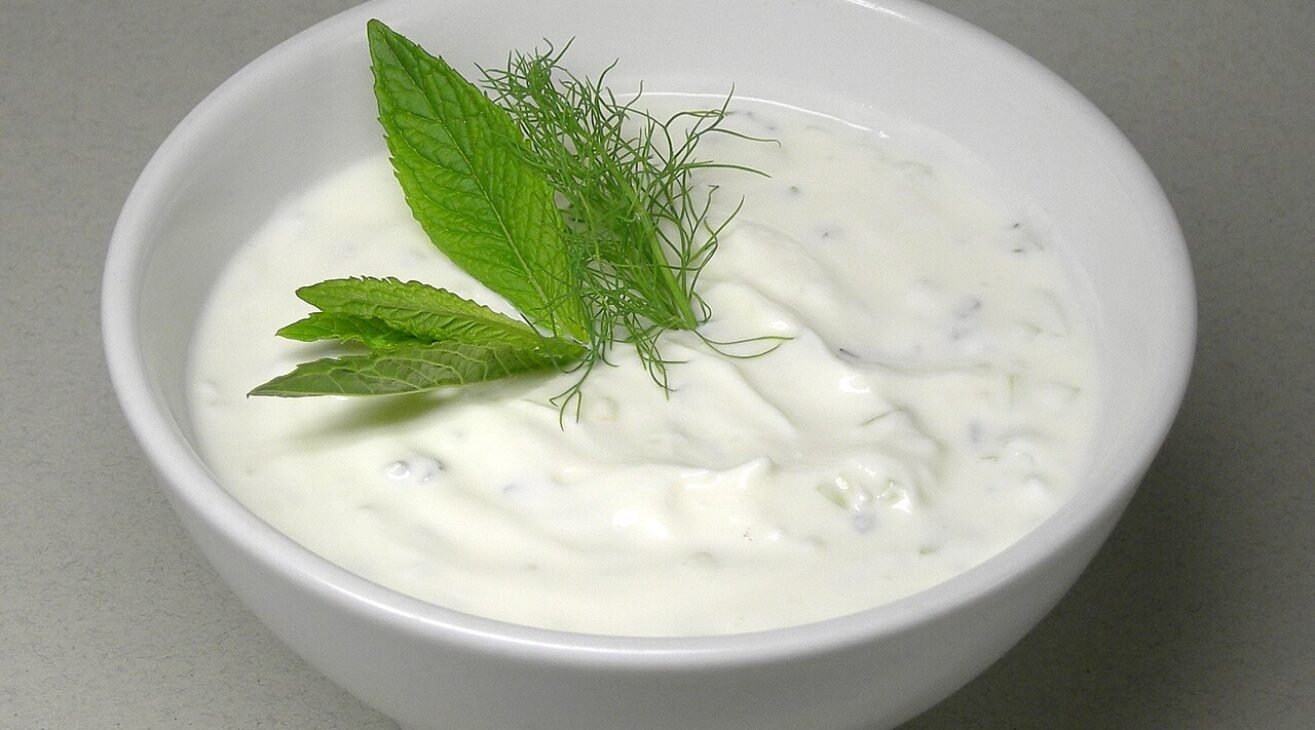
Photo: Rainer Zenz, CC BY-SA 3.0, via Wikimedia Commons.