
A guide to Turkish bread: simit, pide, lavaş, bazlama, açma and more
Turkish bread is a whole family of breads rather than one loaf: simit is the sesame-covered ring, pide is a soft round or oval flat bread, lavaş is thin and puffs up like a pocket, bazlama is a thick griddle bread, and açma is a slightly sweet buttery roll. Which one you eat depends on the occasion: simit with tea, bazlama at breakfast, lavaş with grilled meat.
Add yufka, poğaça, Black Sea corn bread (mısır ekmeği) and pişi (fried dough) and you have the breads you are most likely to meet in a Turkish bakery or on a breakfast table, in Turkey or in London.
Where to buy Turkish bread in London

The everyday breads
Simit
Simit is a ring of dough coated in sesame seeds, sold hot by street vendors across Turkey. The rings are dipped in water mixed with grape molasses (pekmez) before they are rolled in sesame and baked, which gives the dark, crisp crust. Istanbul records mention simit bakers as far back as 1525. In İzmir it is called gevrek (“crisp”). It is traditionally eaten with tea, and also with cheese, jam or ayran. Our simit recipe shows how to make it at home.
Pide
Pide (say pee-deh) is a broad, soft, round or oval flat loaf, usually dimpled and scattered with sesame or nigella seeds. The same word is used for the boat-shaped, topped pide you will find in pide restaurants. For the topped version see our best lahmacun and pide in London guide.
Ramazan pidesi
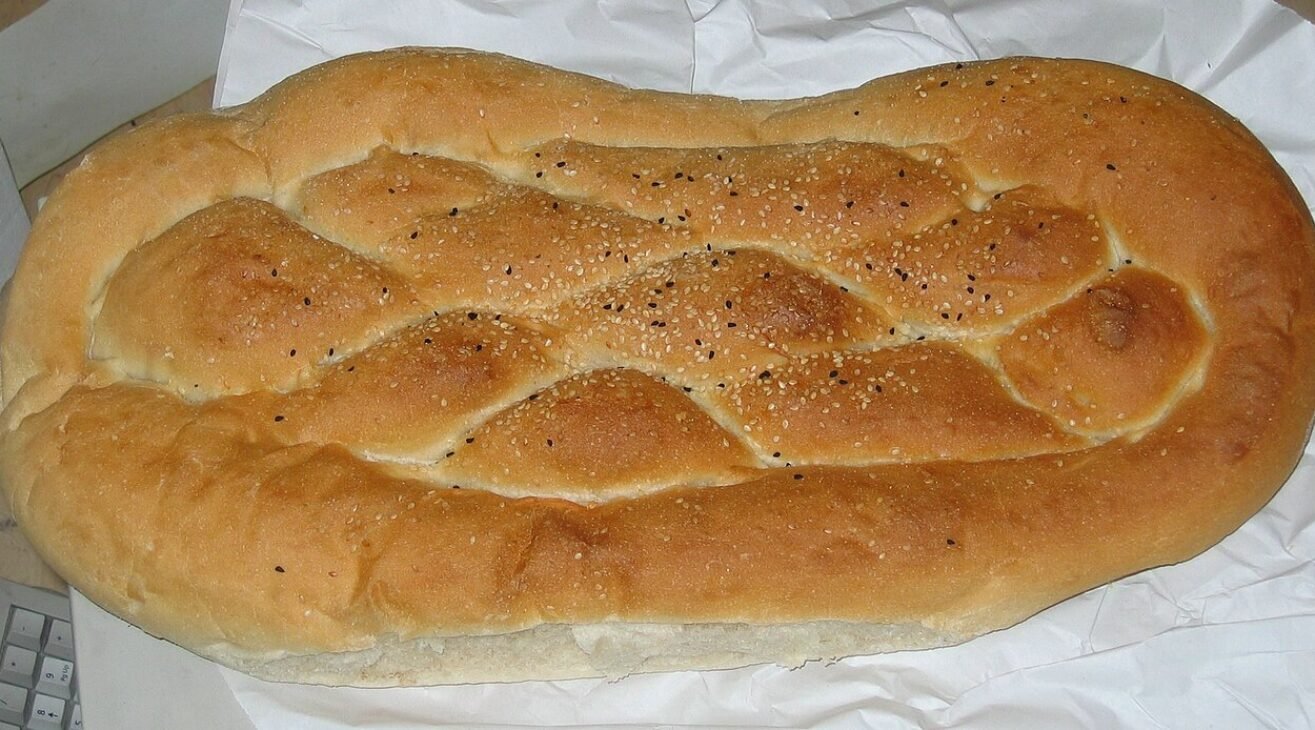
This is a round, fairly flat yeast bread topped with sesame and nigella seeds, with a woven-looking crust. It is traditionally eaten at iftar and sahur, the pre-dawn and sunset meals of Ramadan, and Turkish bakeries make it only during that month, when people queue for it warm before the fast breaks.
Ekmek
Ekmek simply means bread. On a restaurant menu it usually means the plain loaf, often sliced white bread, brought to the table with the meal.
The flatbreads
Lavaş
Lavaş is a thin, large flatbread baked in a tandoor or on a saj (griddle). Grill restaurants bake an oblong version that puffs into a pocket and arrives at the table straight from the oven, and lavaş is also the wrap for tantuni, the Mersin street food. The flatbread tradition of lavash and yufka is on UNESCO’s intangible heritage list (2016), shared by Turkey with Azerbaijan, Iran, Kazakhstan and Kyrgyzstan.
Yufka
Yufka, also known as sac ekmeği, is a round, flat bread thinner than pide, cooked briefly on a griddle called a sac. The same thin dough is used for dishes such as gözleme, a filled flatbread cooked on a griddle.
Bazlama
Bazlama is a leavened, round flatbread, rolled about 1cm thick and puffing up as it cooks, soft and fluffy inside with a lightly speckled surface. The dough includes yoghurt, which gives a slight tang, and it is cooked on both sides on a hot griddle or dry pan. It is sometimes called “village bread” and is best eaten warm at breakfast. Our bazlama recipe shows how.
Pastries and rolls
Açma
Açma is a slightly sweet yeast pastry, often sold as street food. The dough is rich with butter and is often enriched with milk and egg too, and it comes as rolls, rings or twists, plain or with savoury or sweet fillings. It is the soft partner to the crisp simit on a bakery counter.
Poğaça
Poğaça is a soft savoury bun, often filled with white cheese, potato or olive. The dough usually includes yoghurt or egg and is softer and more crumbly than açma. Our poğaça recipe covers it.
Pişi
Pişi is simply fried dough, a little like a savoury doughnut, and turns up on Turkish breakfast tables with cheese or jam.
Corn bread
Corn bread (mısır ekmeği) is tied to the Black Sea region, whose cooking includes many maize dishes.
How to eat Turkish bread
- Tear it rather than cutting it, and use it to scoop meze and mop up olive oil.
- Warm lavaş makes a quick wrap for grilled meat, onions and tomato.
- Simit is a snack, not a side. Eat it fresh, with tea.
- Bazlama and fresh bread are good for dipping into menemen at breakfast.
A quick bread glossary
- Simit / gevrek: sesame ring. Tea-time snack.
- Pide: broad round flat bread, or the topped boat-shaped pide.
- Lavaş: thin, large flatbread that puffs up. Used for wraps.
- Yufka: thin griddle flatbread, thinner than pide.
- Bazlama: soft, puffy griddle bread made with yoghurt.
- Açma: slightly sweet, soft butter roll, often made with milk and egg.
- Poğaça: savoury bun, with egg in the dough.
At an ocakbaşı or meyhane, bread, onions and salad often arrive with the meal. Our first-time ocakbaşı guide explains what usually comes to the table.
Where to buy Turkish bread in London
For fresh bread, see our Turkish bakeries and börek shops list and the Turkish grocers guide, which cover bread baked daily. Turkish bakeries are morning places: simit and açma come out first, often by 8am, and the best go before lunch, while stone-oven bakeries keep pide coming through the day. Ekmek and pide are usually sold by the loaf, simit and açma by the piece, and if the bread is still warm, ask for it in a paper bag rather than plastic so the crust stays crisp. If you want bread as part of a meal, try Turkish breakfast in London, where simit, bazlama and fresh loaves arrive with the spread.
Our pick: Simit Sarayı Harringay, Harringay
A Turkish bakery-café on Green Lanes, part of the Simit Sarayı chain. It serves simit, a simit sandwich and savoury pastries, with seating inside and out, so it is an easy place to try Turkish bread over a çay. See Simit Sarayı Harringay on Turkish Dish.
Turkish bakeries in north London bake through the day, many in stone ovens. These are good places to start:
Turkish Dish recommends

- Taş Fırın Edmonton – Turkish bakery & börek in Edmonton
- Sultan Kitchen Walthamstow – Turkish bakery & börek in Walthamstow
- Pera Artisan Patisserie – Turkish bakery & börek in Harringay & Green Lanes
- Ayintap Pastanesi – Turkish bakery & börek in Edmonton
- Levent Börek Fitzrovia – Turkish bakery & börek in Soho & West End
- Gece Gunduz Turkish Breakfast and Bakery – Turkish bakery & börek in Kilburn & West Hampstead
See all 16 Bakery & Börek places in London
Turkish bread FAQs
What is the difference between pide and lavaş?
Pide is a broad, round, flat loaf, while lavaş is a much thinner, larger flatbread that is often served puffed and used for wrapping.
Is simit the same as a bagel?
They look alike and are sometimes called a “Turkish bagel”. A bagel is boiled before baking, whereas simit is dipped in a water and molasses syrup and coated in sesame seeds.
What is Turkish bread called in a restaurant?
Plain bread is ekmek. The thin flatbread that puffs up with kebabs is lavaş. “Pide” on a menu may mean either the flat bread or the topped, boat-shaped dish, so look at the description.
Is Turkish bread vegan?
Many are, since basic dough is flour, water, yeast and salt, but açma contains butter and often milk and egg, and poğaça usually contains egg or yoghurt. Ask the bakery if you need to check.
Photo: Caroline Ford, CC BY-SA 3.0, via Wikimedia Commons.

